Direct Answer: One slow drain usually means a localized clog. Multiple drains backing up at the same time almost always points to a main sewer line problem — and that’s a different repair entirely.
One of the most common calls we get at Maverick Plumbing is from homeowners who describe their drains as “backing up” — but what they’re actually dealing with could be two very different problems. Whether you have one sluggish sink or multiple fixtures failing at the same time changes everything about how the repair is approached.
I want to be direct about this: a single slow drain and multiple drains backing up simultaneously are not the same problem. Treating them the same way wastes time, wastes money, and — in the second case — can allow a more serious situation to get worse while you’re trying to fix a symptom.
This comes up constantly in Watsonville and throughout Santa Cruz County, where older housing stock, hard water buildup, and aging sewer infrastructure all create conditions for drain problems. If you’re trying to figure out what you’re actually dealing with, this is the place to start.
One Slow Drain: What It’s Telling You (and What It Isn’t)
When a single fixture drains slowly — and nothing else in the house is affected — the problem is almost always localized to that drain line. The clog is sitting somewhere between the drain opening and the point where that line connects to the larger sewer system.
The specific cause depends on which fixture is involved:
- Bathroom sink: Usually hair and soap scum buildup at the stopper or in the P-trap. This is one of the most common drain calls we see, and it tends to build gradually before it fully blocks.
- Kitchen sink: Grease is the primary culprit. Cooking oil and fats go down liquid and cool into a sticky film that coats the pipe walls over time. Eventually, other debris sticks to it and the line narrows enough to slow noticeably.
- Washing machine drain: Lint and debris that bypass the machine’s filter can accumulate at the standpipe. This one often presents as water backing up out of the standpipe during the spin cycle rather than just slow drainage.
Knowing which fixture is affected — and whether any other fixture in the house is also slow — is the single most useful piece of information you can have before calling a plumber. It tells a licensed contractor a lot about where the problem sits and what kind of repair is likely needed.
For more background on why drain clogs happen faster than expected in this area, Why Watsonville Drains Clog Faster Than You’d Expect is worth reading.
Multiple Drains Backing Up: This Is a Main Line Problem
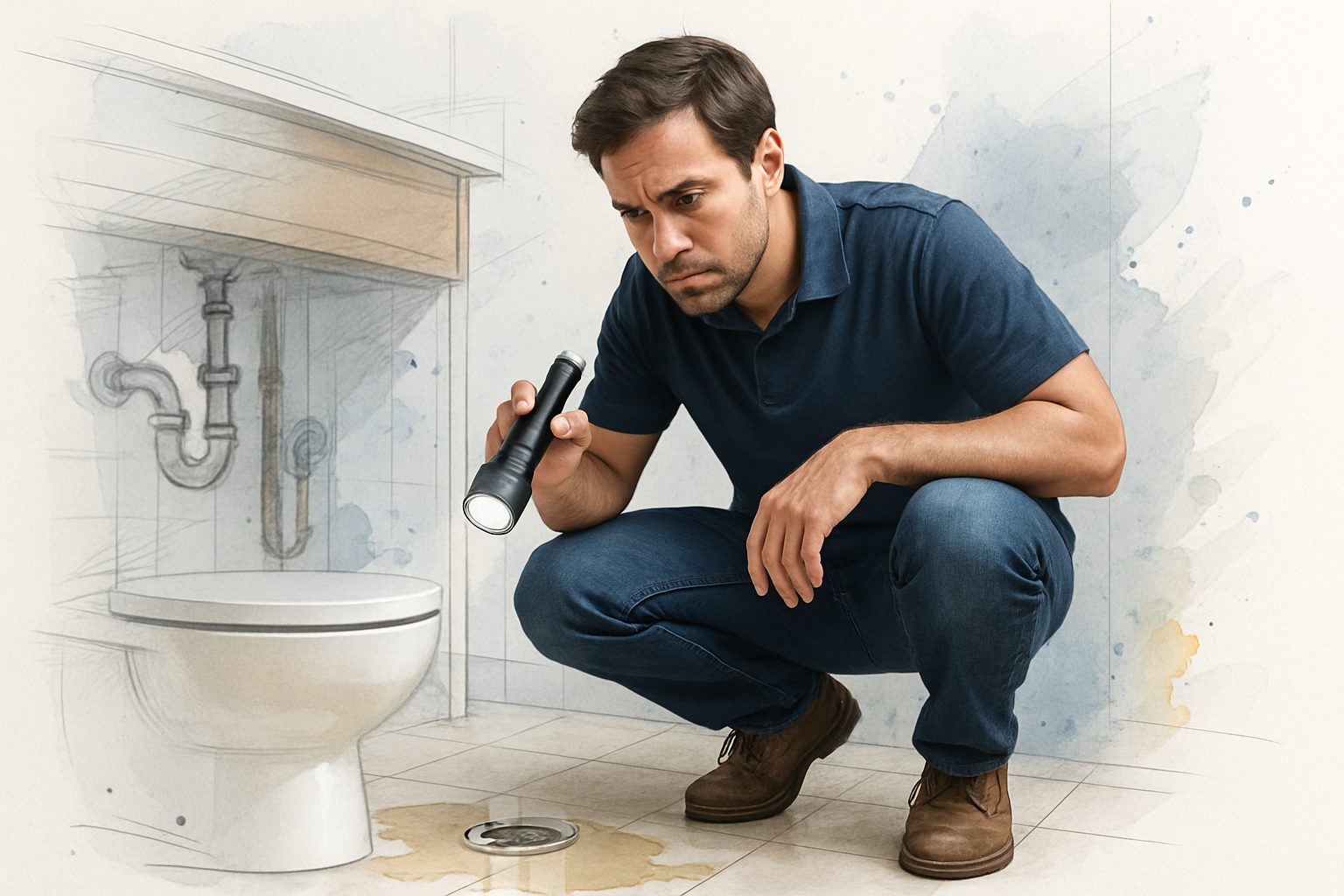
When two or more fixtures start backing up at the same time — especially fixtures that are far apart in the house — the problem is almost certainly in the main sewer line, not at the individual fixtures.
I’ve taken calls where a homeowner discovered their toilet and bathroom sink were both backing up simultaneously while they were away from home. That’s not a coincidence. When the main sewer line is blocked or compromised, wastewater has nowhere to go. It reverses course and finds the lowest available exit point, which is typically the toilet or a floor drain in a basement or lower level.
Here’s what makes this pattern significant:
- A clog at any single fixture doesn’t affect other fixtures. If it does, the blockage is downstream of where multiple lines converge.
- Toilet backups combined with sink backups are a strong indicator the problem is at or near the main line.
- Floor drain backups in a garage or laundry room, especially when you run water elsewhere in the house, are a classic main line warning sign.
This pattern requires a different kind of diagnosis entirely. A sewer camera inspection is typically the most direct way to identify whether the line is blocked by grease accumulation, root intrusion, or physical damage to the pipe. What a Sewer Camera Actually Shows (and When You Need One) explains what that process actually involves.
In some cases what presents as a “clog” is actually structural — a collapsed section, significant root intrusion, or pipe separation. When a Clogged Drain Is Actually a Broken One covers how those situations are identified and what the repair path looks like.
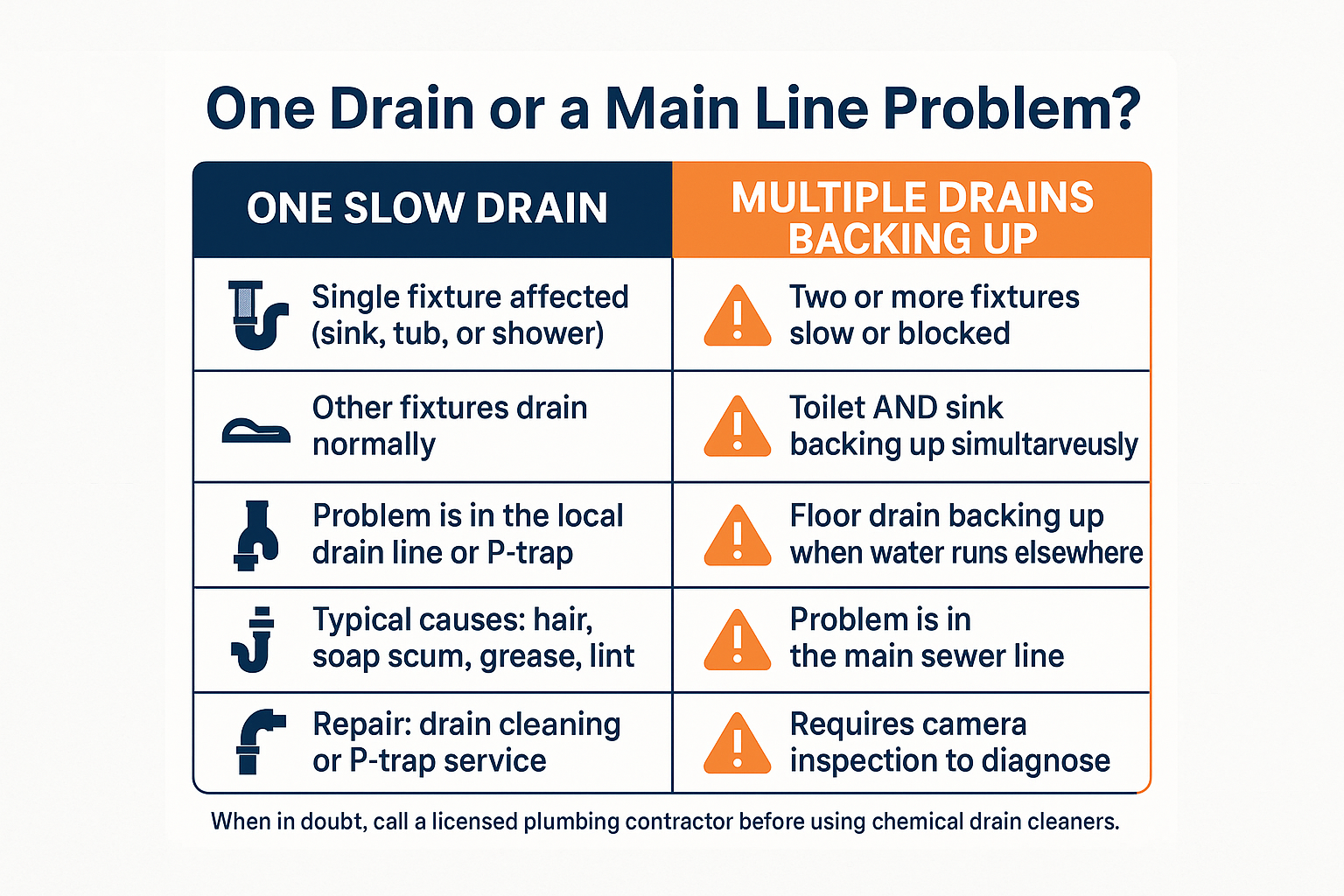
How to Read Your Drain Problem at a Glance
This quick-reference shows how to tell whether you’re dealing with a localized clog or a main sewer line issue based on which fixtures are affected.
The Truth About Chemical Drain Cleaners
I understand why homeowners reach for a bottle of drain cleaner first. It’s fast, it’s available at every hardware store in Watsonville, and it sometimes works. But I want to be honest about where it falls short.
Store-bought drain cleaners are designed to dissolve organic matter — hair, soap buildup, and some grease. On a fresh, partial clog near the surface of a drain, they can provide temporary relief. The problem is what they don’t do:
- They don’t clear hardened mineral scale, which is common throughout Santa Cruz County because of the region’s hard water.
- They don’t remove root intrusion, which is one of the most common causes of recurring main line problems in older Watsonville neighborhoods.
- They can accelerate deterioration in aging pipes — particularly galvanized steel and cast iron, which are present in a lot of the older homes in this area. Caustic chemicals sitting in those pipes, especially repeatedly, can cause more damage than the clog itself.
The bigger issue is this: a clog that keeps coming back after chemical treatment is a signal to stop treating the symptom. If you’ve poured product down a drain twice in three months and it’s slow again, something is happening in that line that a bottle can’t address. That’s the point where a professional diagnosis — not another product — is the right move.
For context on why some drains keep repeating, Why the Same Drain Keeps Backing Up walks through the patterns we see most often.
Single Drain vs. Main Line: Quick Reference by Symptom
Use this to quickly identify which situation you’re more likely dealing with before you call.
| Symptom | Most Likely Cause | Next Step |
|---|---|---|
| One sink drains slowly, others fine | Localized clog — stopper, P-trap, or drain line | Professional drain cleaning |
| Kitchen sink gurgling after dishes | Grease buildup in kitchen drain line | Drain cleaning or hydro jetting |
| Washing machine water overflows standpipe | Lint/debris clog at standpipe | Standpipe inspection and cleaning |
| Toilet AND sink backing up together | Main sewer line blockage | Camera inspection, main line service |
| Floor drain backs up when shower runs | Downstream blockage at main line | Camera inspection, main line service |
| Same drain clogs repeatedly after treatment | Root intrusion, scale buildup, or pipe damage | Camera inspection to diagnose root cause |
Why Licensing Matters for Drain Work Specifically
Drain cleaning can look simple from the outside, and that’s part of why some homeowners consider hiring unlicensed operators to save money. I’d encourage you to think carefully about that, particularly when multiple drains are involved.
In California, a licensed plumbing contractor — like any contractor holding an active CSLB license — is required to carry insurance, perform work to code, and stand behind the work performed. Maverick Plumbing Technicians, Inc. holds CSLB license #1102966. That accountability matters more than it might seem on a drain job.
Here’s why: drain work sometimes reveals something much bigger. What starts as a clog diagnosis can turn into a finding of significant root intrusion, a deteriorated section of pipe, or a repair that needs to be documented for a property sale or insurance claim. An unlicensed operator can’t legally perform or document that work, and they carry no professional liability if the situation gets worse.
If the repair turns out to be simple, you’ll know it was done right. And if it turns out to be something more serious, you’ll want someone accountable in your corner from the start.
For guidance on how to read whether a problem is worth repairing or replacing, The Difference Between a Slow Drain and a Drain That Actually Needs Repair covers that decision in detail.
Frequently Asked Questions About Clogged Drain Repair in Watsonville
My toilet and bathroom sink backed up at the same time. Is that a main line problem?
Almost certainly yes. When two fixtures in the same home back up simultaneously — especially a toilet and a sink — it’s a strong indicator that the main sewer line is blocked or impaired. Wastewater has nowhere to go and reverses toward the lowest exit points. This is not a fixture-level clog, and it won’t be solved by plunging or chemical treatment. A camera inspection of the main line is typically the right first step.
Can I use a drain cleaner while I wait for a plumber?
For a single, minor slow drain — possibly. But if multiple fixtures are involved, or if a plumber is coming soon, I’d skip it. Chemical cleaners can interfere with the diagnostic process, and in older galvanized or cast iron pipes they can cause additional damage. If a plumber is already on the way, just leave the drain alone.
How do I know if my sewer line has root intrusion?
You usually can’t tell from the surface. Root intrusion develops gradually — tree and shrub roots follow moisture and can work their way into small cracks or loose joints in older sewer lines. The signs are recurring clogs that keep coming back even after cleaning, slow drains throughout the house, or gurgling sounds when water drains. A sewer camera inspection is the only reliable way to confirm it.
My kitchen drain keeps clogging a few months after I have it cleaned. Why?
Grease accumulates continuously as long as cooking oils and fats go down the drain. Even after a thorough cleaning, the buildup starts again. If it’s happening faster than it should, the issue could be pipe geometry (a section with low slope that traps grease), a partial obstruction further down the line, or simply habits that need to change — like disposing of cooking grease in the trash instead of the sink. A camera inspection can tell you whether there’s a structural reason it keeps repeating.
What’s the difference between drain cleaning and hydro jetting?
Standard drain cleaning — using a cable auger — physically breaks up or pulls out a clog. Hydro jetting uses high-pressure water to scour the interior walls of the pipe, removing grease film, mineral scale, and soft root material that a cable can’t fully address. It’s typically reserved for lines that keep reclogging or for commercial properties where heavy use builds up residue faster. A licensed plumber can assess which approach fits the situation.
Not Sure Which Problem You’re Dealing With?
If you’re in Watsonville or anywhere in Santa Cruz County and you’re trying to figure out whether you have a localized clog or something deeper going on in your sewer line, we can help you sort it out. Maverick Plumbing Technicians, Inc. is a licensed and insured plumbing contractor serving residential and commercial customers throughout the area, with 24/7 emergency service available when a backup can’t wait. Call us at (831) 515-9903 or visit maverickplumbingtechnicians.com to request service.
