Direct Answer: A plumbing problem becomes an emergency when it involves active water damage, a gas leak, sewage backup, or a complete loss of water — situations where waiting causes serious harm to your home or health.
Most plumbing problems give you a little time. A slow drain, a dripping faucet, low water pressure — those are real issues, but they won’t destroy your house overnight. The ones that will? They don’t wait for business hours.
Homeowners across Monterey County — from Watsonville down through Salinas — tend to second-guess themselves when something goes wrong. They wonder if they’re overreacting by calling a plumber at night, or whether they should just wait until morning. That question has a real answer, and it depends on what’s actually happening, not how bad it feels.
This article breaks down which plumbing problems are genuine emergencies, which ones can wait, and what you should do the moment you’re not sure.
The Line Between Urgent and Catastrophic
There’s a difference between a plumbing problem that’s inconvenient and one that’s actively damaging your home or putting someone at risk. Most homeowners deal with the first kind. But the second kind escalates fast — and the window for stopping the damage is often measured in minutes, not days.
These are the situations that qualify as true plumbing emergencies:
- Active water leak with no way to shut it off — water spraying or flowing continuously from a pipe, fixture, or appliance connection
- Sewage backup into the home — when wastewater is coming up through floor drains, tubs, or toilets
- Complete loss of water — no water at any fixture throughout the home, with no known utility shutoff in progress
- Gas leak — the smell of rotten eggs near a gas line, appliance, or meter
- Slab leak showing active signs — warm spots on the floor, sudden water sounds beneath the slab, or water appearing at the base of walls
- Flooding from a burst pipe or failed water heater — especially when it’s reaching drywall, flooring, or the electrical panel
If any of those are happening right now, stop reading and call. For everything else, keep going.
Gas Leaks Are a Separate Category — Treat Them That Way
A gas leak is not a plumbing problem you assess from inside the house. If you smell rotten eggs — or something sulfur-like near a gas appliance, meter, or line — the protocol is the same every time.
Leave the building immediately. Don’t flip light switches, don’t open the garage door with the wall button, don’t light anything. Get outside, move away from the structure, and call from outside. Call 911 first, then call a licensed plumber.
Gas leaks can ignite from sources you wouldn’t think of — a thermostat clicking on, a refrigerator compressor starting, even a doorbell. The danger isn’t visible. You won’t see it coming.
Maverick Plumbing handles gas leak repair and has 24/7 emergency service available. But the first call in any gas situation goes to 911, not a plumber.
When a Leak Becomes Structural
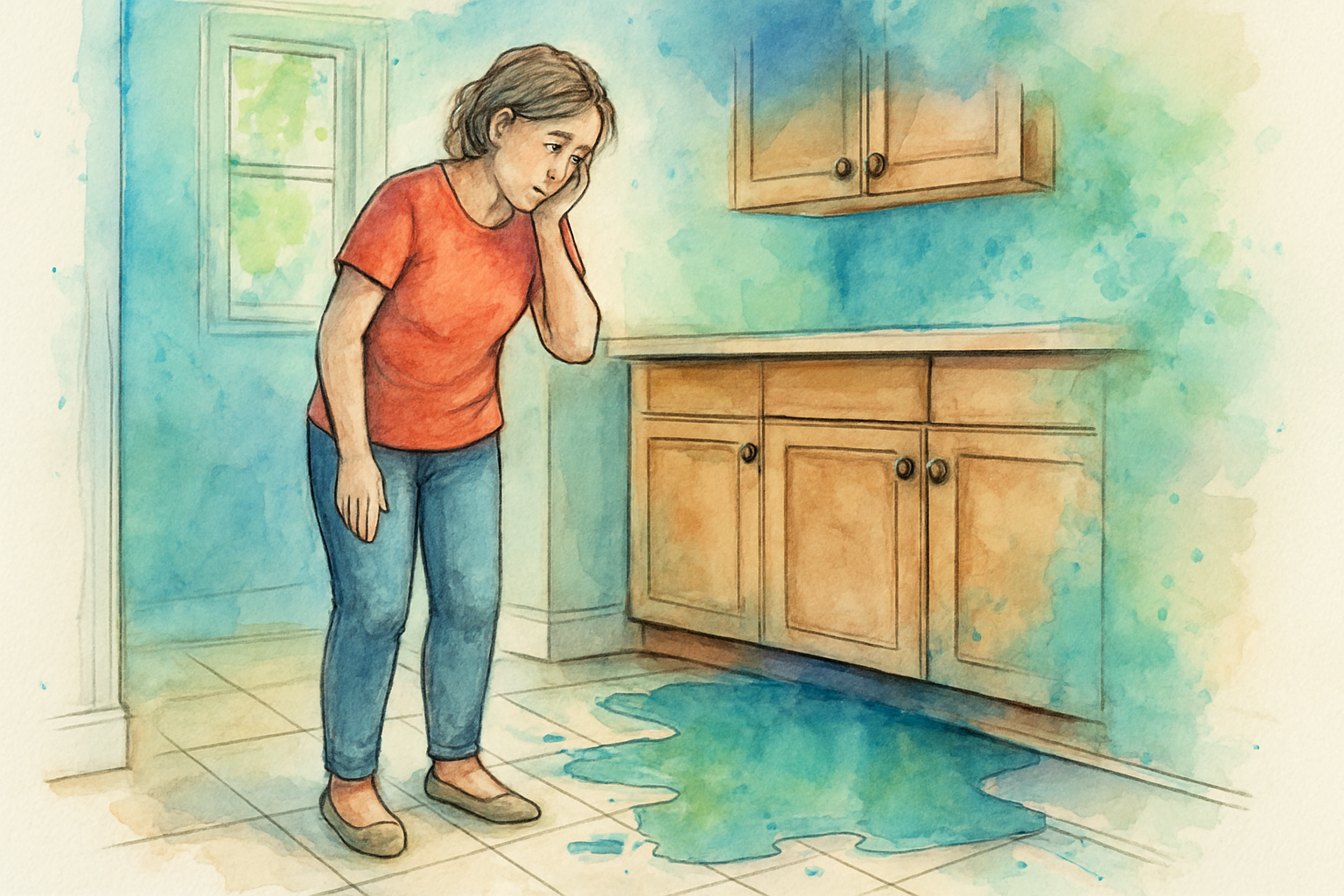
Not all leaks are visible. Some of the most damaging ones in Monterey County homes happen below the foundation — and they can run for weeks before a homeowner notices anything at all.
A slab leak is water escaping from a pressurized pipe that runs beneath your concrete foundation. The water doesn’t always surface right away. Instead, it saturates the soil under the slab, which can shift and settle the foundation over time. By the time you see a wet spot on the floor or a crack in the wall, the damage is often already significant.
If you’re seeing any of these, treat it as urgent:
- Warm or hot spots on the floor, especially on a slab foundation
- Water meter spinning when all fixtures are off
- Unexplained spike in your water bill
- Sounds of running water with nothing turned on
- Cracks appearing in interior walls or floors
You can read more about what actually happens inside a home when this goes unaddressed in this article on what happens to a home when a slab leak goes undetected. And if you’re trying to figure out whether water is coming from under your foundation specifically, this guide on how to know if the leak is under your foundation walks through the signs in more detail.
These aren’t situations where waiting a few weeks is harmless. The longer a slab leak runs, the more the repair scope grows.
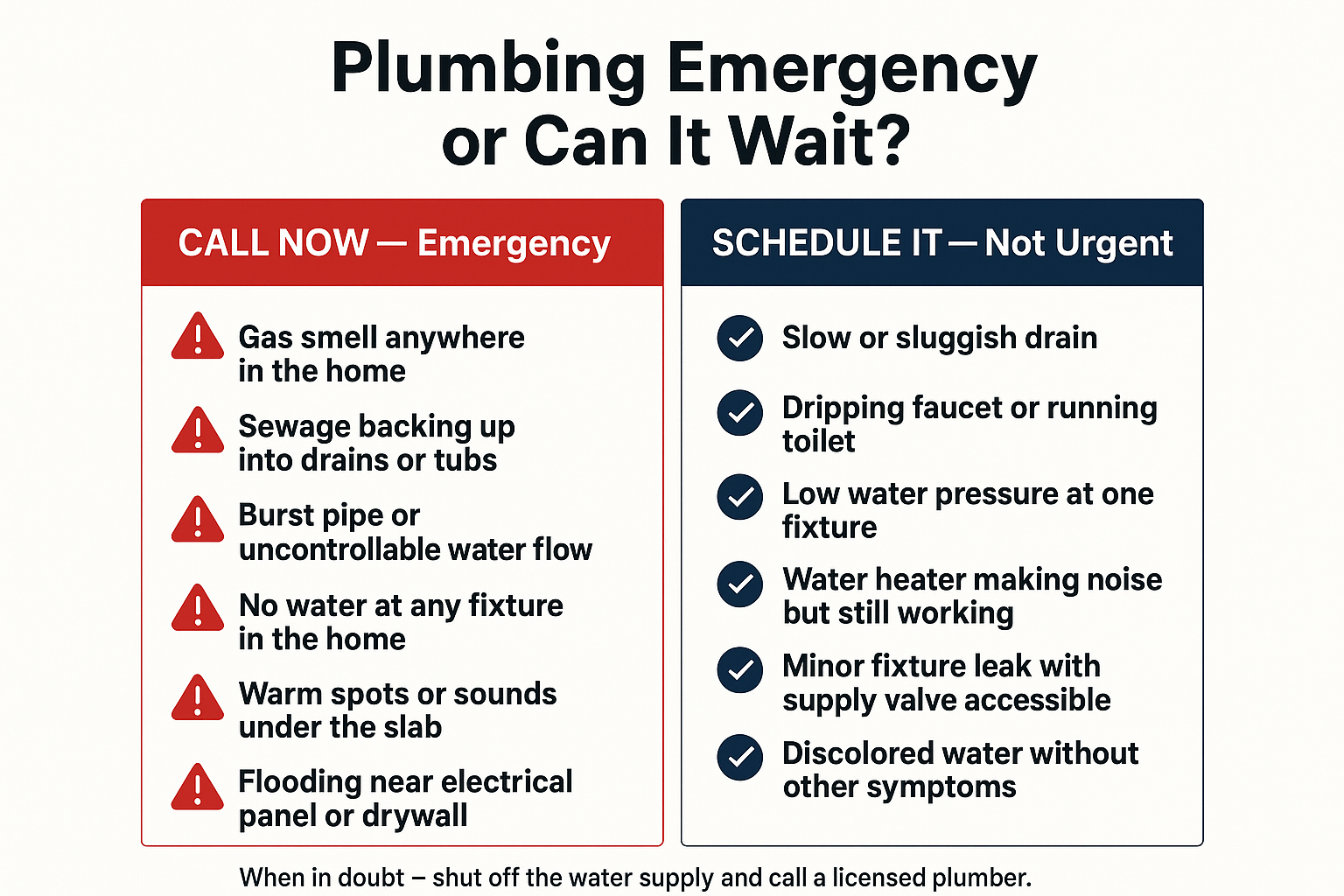
Plumbing Emergency or Can It Wait? A Quick Reference
Use this reference to decide whether your situation needs an immediate call or can be scheduled during regular hours.
Plumbing Problems by Response Type
Here’s a straightforward breakdown of common plumbing problems, how urgent each one actually is, and what the first step should be.
| Problem | Urgency Level | First Step |
|---|---|---|
| Gas odor near appliance or line | Immediate — leave now | Exit building, call 911 from outside |
| Sewage backup in drains or toilets | Emergency | Stop using all water, call a plumber |
| Burst or uncontrolled pipe leak | Emergency | Shut off main water supply, call a plumber |
| No water throughout the home | Urgent | Check with utility, then call a plumber |
| Warm floor spots or water sounds under slab | Urgent | Shut off water, call for leak detection |
| Slow or partial drain clog | Non-urgent | Schedule service — avoid chemical drain cleaners |
| Dripping faucet or running toilet | Non-urgent | Schedule at your convenience |
| Water heater making noise | Monitor | Note symptoms, schedule an inspection |
| Low water pressure at one fixture | Non-urgent | Check aerator, then schedule if persists |
The Calls That Feel Urgent But Usually Aren’t
Slow drains are one of the most common reasons homeowners feel like they need to call someone immediately. But most slow drains — even really slow ones — are a buildup problem, not a structural failure. Hair, soap, grease, and sediment accumulate over months. The drain doesn’t stop working overnight, and it won’t fall apart if you wait a few days to schedule service.
The important distinction is whether the slowness is isolated to one fixture or showing up across multiple drains at once. A single slow bathroom sink is usually a local clog. Multiple drains backing up at the same time — especially when flushing a toilet makes water rise in the tub — points to a deeper mainline problem, which is a different situation entirely.
For more on reading those signals correctly, this breakdown of the difference between a slow drain and a drain that actually needs repair goes into the specifics.
A running toilet and a dripping faucet also don’t require a same-night call — but they do waste water continuously and will show up in your bill. Schedule them, just don’t lose sleep over them.
What to Do While You Wait for a Plumber
For any leak — small or large — shutting off the nearest supply valve buys time and limits damage. Under-sink valves, toilet supply valves, and individual fixture shutoffs exist specifically for this reason. If you can’t find or reach the individual valve, the main shutoff for the house is usually near the meter or at the exterior wall where the main line enters.
For a sewage backup, stop using all water in the home immediately. Every flush, every sink, every load of laundry pushes more waste into a system that has nowhere to go. The backup will worsen with continued use.
For a gas smell, don’t wait for any other instruction — get out. Leave doors open as you exit if it’s quick to do so, but don’t go back in to investigate. Call 911 from outside.
Documenting what you see before the plumber arrives is also useful — a quick phone video of where water is coming from, what the meter is doing, or where you’re hearing sounds helps the technician diagnose faster.
Frequently Asked Questions About Plumbing Emergencies
My toilet has been overflowing and won’t stop — is that an emergency?
Yes, if you can’t stop the flow. First, reach behind the toilet and turn the supply valve clockwise until it stops. That cuts off water to the toilet only. If the valve doesn’t work or water is coming up through the floor drain, that’s a sewer backup and you should stop using all water in the home and call immediately.
I smell something like rotten eggs but I’m not sure if it’s gas — what should I do?
Treat it as a gas leak until proven otherwise. Leave the building immediately, avoid touching any switches or open flames, and call 911 from outside. Don’t go back inside to investigate. Gas companies add that sulfur smell specifically so you can’t miss it — trust your nose.
My water heater is making a loud popping or rumbling sound. Do I need to call tonight?
Probably not tonight, but you should schedule an inspection soon. Popping and rumbling in a tank water heater is usually sediment buildup — common in Santa Cruz County and Monterey County homes because of hard water. It can lead to premature failure if left alone, but it’s rarely an overnight emergency unless you’re also seeing water on the floor around the unit.
How do I find my main water shutoff?
In most Watsonville and Santa Cruz area homes, the main shutoff is near where the water line enters the house — often in a utility closet, along an exterior wall, or near the water meter at the street. The meter-side shutoff typically requires a meter key or wrench. Knowing where yours is before an emergency happens is worth five minutes of your time.
Can I use chemical drain cleaners while I wait for a plumber?
No. Chemical drain cleaners can damage pipe materials, especially in older homes with galvanized or cast iron pipes. They also create a hazard for the plumber working on the drain. Skip them entirely — a drain snake or hydro jetting by a licensed technician will clear the clog without damaging the line.
What counts as ‘emergency plumbing‘ for a commercial property?
For restaurants and food service facilities, a sewer backup or loss of water is an immediate health code issue — it may require you to stop service. For any commercial property, a gas leak, burst pipe, or active flooding near electrical equipment qualifies as an emergency. Maverick Plumbing serves commercial clients throughout Santa Cruz County and parts of Monterey County with 24/7 emergency availability.
Not Sure If Your Situation Can Wait?
If you’re second-guessing whether to call, that’s usually a sign worth listening to. Maverick Plumbing Technicians, Inc. is a licensed and insured plumbing contractor (CSLB #1102966) serving homeowners and commercial clients throughout Monterey County and Santa Cruz County, with 24/7 emergency service available when it can’t wait. Call (831) 515-9903 any time, or reach out through maverickplumbingtechnicians.com to request service.
