

Direct Answer: Some plumbing problems — active flooding, gas odors, sewage backups — can’t wait. Others, like a slow drain or a dripping faucet, are safe to monitor until morning. Knowing the difference saves money and prevents panic.
It’s 11 p.m. You hear water running where it shouldn’t be, or you notice the toilet won’t stop backing up. The first question in your head isn’t “what’s wrong” — it’s “do I call someone right now or wait until morning?”
For homeowners in Monterey County, that question comes up more often than most people expect. Older housing stock in Watsonville and Santa Cruz, aging sewer laterals, and hard local water all contribute to plumbing situations that can escalate fast — or sit quietly until a licensed plumber can get there at a reasonable hour.
This article breaks down exactly how to think through that call. Two categories matter most: problems that are actively damaging your home or creating a safety risk, and problems that are annoying but stable. Getting that distinction right is the difference between a smart decision and an expensive mistake in either direction.
Problems That Cannot Wait — Call Now
Some plumbing situations are emergencies the moment they start. The common thread is active damage, health risk, or a safety hazard that gets worse with every minute you wait.
If you smell gas anywhere in your home, stop reading and act immediately. Leave the building without touching any light switches or electrical devices. Don’t use your phone until you’re outside. Call your gas company and a licensed plumber from outside the property. Gas leak response is available 24 hours a day, 7 days a week — this is not a wait-until-morning situation under any circumstances.
Other situations that demand an immediate call:
- Active flooding or water spraying freely — a burst pipe, a supply line failure, or a failed water heater connection can dump dozens of gallons into your home in minutes
- Sewage backing up into your home — raw sewage in a tub, toilet, or floor drain is a health hazard and often signals a main line blockage that won’t resolve on its own
- A slab leak you can hear or feel — if you can hear water running with everything turned off, or your floors are warm in a spot where they shouldn’t be, the longer you wait the worse the damage to your home’s foundation becomes
- No water at all — a complete loss of water pressure throughout the house, especially after recent freezing temperatures or construction nearby, often signals a main line break
These aren’t situations to monitor. They are situations to stop.
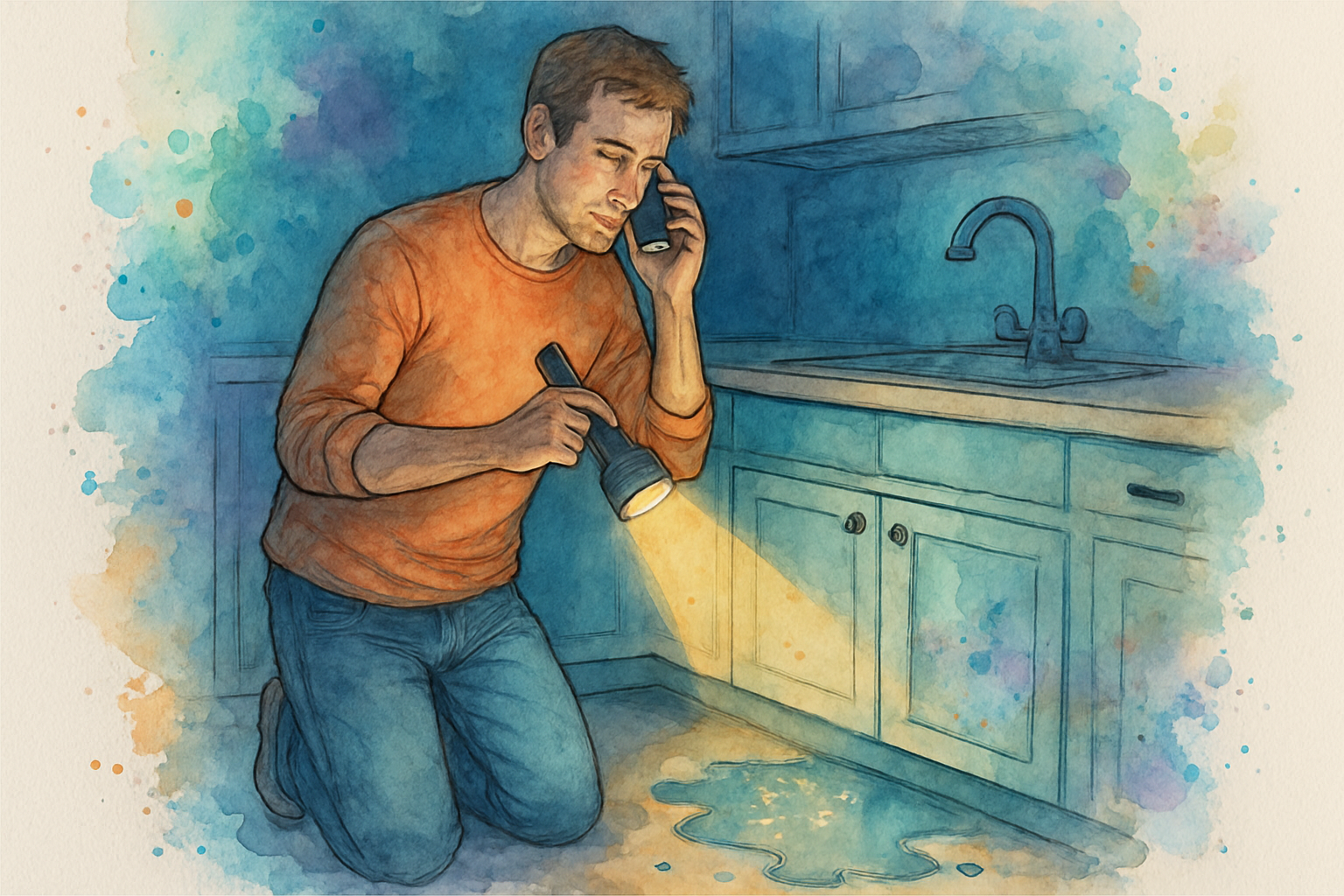
Problems That Can Wait — But Shouldn’t Be Ignored
Not every 11 p.m. plumbing discovery requires a middle-of-the-night service call. Some problems are real, worth scheduling soon, but stable enough that you can safely get to morning without making things worse.
The key word is stable. A problem is safe to wait on if it isn’t actively spreading water, creating a safety risk, or blocking you from using a major system in your home.
These situations can usually wait until morning:
- A slow or partially clogged drain — if water is draining slowly but still draining, you can avoid using that fixture overnight and call first thing. Read more about when a slow drain actually needs professional repair before assuming it’s just buildup.
- A dripping faucet or running toilet — annoying and wasteful, but not dangerous. Shut off the supply valve under the fixture if it bothers you, and call in the morning.
- Low water pressure in one fixture — a single fixture losing pressure usually points to a localized issue like a clogged aerator or a failing valve, not a system-wide failure.
- A water heater that’s producing lukewarm water — if you have any hot water, the unit hasn’t failed completely. This warrants a prompt service call, not an emergency one.
If you’re genuinely unsure whether something can wait, that uncertainty itself is useful information. You can call a licensed contractor’s after-hours line and describe what you’re seeing — a professional can often help you assess whether to act now or wait for daylight.
Quick Reference: Urgent vs. Wait Until Morning
Use this guide to make a fast decision when something goes wrong at an inconvenient hour.
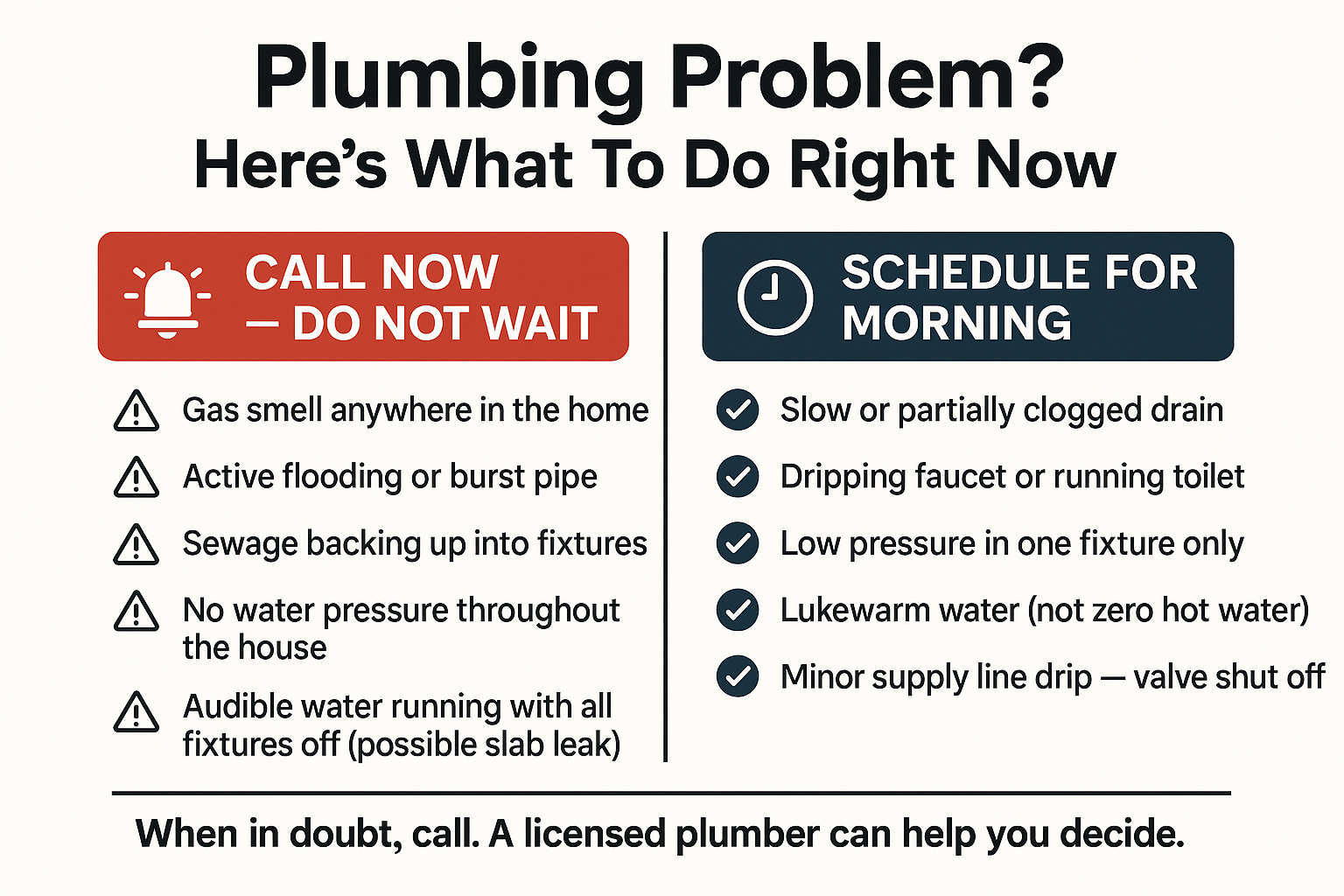
Plumbing Situations at a Glance
This table covers the most common late-night plumbing scenarios homeowners in Watsonville and Santa Cruz County deal with — and the right response for each.
| Situation | Urgency Level | Why |
|---|---|---|
| Gas odor in the home | Immediate — leave now | Life safety risk; cannot be assessed from inside |
| Burst pipe or active flooding | Immediate | Water damage compounds by the minute |
| Sewage backup in tub or toilet | Same night | Health hazard; often signals full main line blockage |
| Suspected slab leak (running sound, warm floor) | Same night or first morning | Foundation damage worsens over time — see your options |
| Complete loss of water pressure | Same night | May indicate main line break or major valve failure |
| Slow drain — still draining | Schedule within 1–2 days | Stable if you avoid heavy use of that fixture |
| Dripping faucet — supply valve accessible | Schedule within a week | Shut supply valve; safe to wait if contained |
| Running toilet | Schedule within a few days | Wasteful but not dangerous |
| Lukewarm water from heater | Schedule promptly | Unit is declining but not yet failed |
The Middle Zone: When “Wait and See” Becomes a Mistake
There’s a category of plumbing problems that homeowners in Monterey County most often misjudge — situations that feel stable but are actually getting worse underneath the surface.
The most common example is a suspected leak with no visible water. If you’re noticing a higher-than-normal water bill, a musty smell near a wall, or soft spots in your flooring, those are signs something is happening that you cannot see. Waiting days or weeks before getting eyes on it is how a manageable repair turns into a major one.
Another example is a drain that backs up and then clears on its own. That’s not the drain fixing itself — that’s a partial blockage that’s going to seal completely at some point, often at the worst possible moment. Understanding when a drain actually needs professional attention versus a simple cleaning is worth reading before you decide to wait.
Slab leaks fall into this same middle zone. Many homeowners don’t feel urgency around a slab leak because they can’t see the water. But the damage accumulates underground, and by the time it surfaces — cracked flooring, shifting foundation, mold — the repair scope has grown significantly. If you have any reason to think a leak might be under your foundation, getting a professional assessment is more time-sensitive than it might feel.
The standard for scheduling is simple: if the problem is stable and contained, morning is fine. If it’s spreading, hidden, or getting worse — even slowly — sooner is better.
How to Limit Damage While You Wait
If you’ve determined a problem can wait until morning, there are things you can do right now to keep it from getting worse overnight.
Know where your main shut-off valve is before you ever need it. In most Watsonville and Santa Cruz homes, it’s near the meter at the front of the property or inside a utility closet. If you have an active drip or minor leak you can’t fix right now, shutting off water to just that fixture — or the whole house if needed — stops the damage.
For individual fixtures:
- Toilets have a shut-off valve on the supply line behind or below the tank — turn it clockwise to stop flow
- Sinks have valves under the cabinet — one for hot, one for cold
- Water heaters have a dedicated shut-off on the cold water inlet line at the top of the unit
If the issue is a slow drain, just stop using that fixture. Don’t pour drain cleaner into it overnight — that can make a plumber’s job harder in the morning and won’t fix anything structural.
For any situation where you’re genuinely uncertain whether the problem is stable, understanding what qualifies as a plumbing emergency is a good place to start before you make the call.
Frequently Asked Questions About Plumbing Urgency
What’s the fastest way to stop water damage while I wait for a plumber?
Shut off the water supply to the affected fixture, or shut off the main valve to the whole house if you can’t isolate the source. Then put down towels or buckets to catch what’s already dripping and move anything valuable away from the wet area. Don’t try to dry out the area with fans until a plumber has confirmed the leak is fully stopped.
Can a slow drain turn into a real emergency overnight?
It can if the blockage is close to sealing completely. If water is backing up into other fixtures when you run water — say, the toilet bubbles when you use the sink — that’s a sign the main line is involved and the situation is more serious than a simple slow drain. That one should get a same-day call.
I smell something like rotten eggs but I’m not sure it’s gas. What do I do?
Treat it as gas until you know otherwise. Leave the home without touching any switches or open flames, and call from outside. A rotten egg smell is the added odorant in natural gas — it’s there specifically so you notice it. Do not go back inside to investigate. Call your gas provider and a licensed plumber. Gas leak response is available 24/7.
My water heater is making noise at night. Is that an emergency?
Usually not. Popping, rumbling, or hissing sounds from a tank water heater are most often caused by sediment buildup — a known issue in Santa Cruz County where hard water accelerates mineral accumulation. It’s a real problem worth scheduling, but it’s not a middle-of-the-night situation unless you’re also seeing water pooling around the unit or no hot water at all.
How do I know if I have a slab leak and should I call tonight?
Common signs include hearing water running when everything in the house is off, warm or wet spots on the floor, a sudden jump in your water bill, or a drop in water pressure with no obvious cause. If you’re seeing more than one of these, it’s worth a same-night call — not because the ceiling is falling in, but because slab leaks compound quickly and the window for a less invasive repair closes fast.
Is it okay to use a plunger on a backed-up toilet before calling a plumber?
Yes — a standard plunger is safe to try on a single backed-up toilet. If the clog clears and the toilet flushes normally, you’re probably fine. But if the toilet is backing up into your tub or sink, or if multiple drains are slow at the same time, stop plunging. That’s a main line issue and adding pressure won’t help.
Not Sure Whether to Call Tonight?
Maverick Plumbing Technicians, Inc. serves homeowners throughout Monterey County and Santa Cruz County — including 24/7 emergency response for situations that can’t wait. If you’ve read through this and you’re still not certain which side of the line your problem falls on, the straightforward move is to call and describe what you’re seeing. Reach the team directly at (831) 515-9903, or visit maverickplumbingtechnicians.com to request service online.
