Direct Answer: If a drain keeps clogging in the same spot after cleaning, the problem is likely a damaged or root-invaded pipe — not just buildup. A camera inspection is the only way to confirm it.
You snake the drain. It clears. Two weeks later, it’s backed up again. You pour cleaner down it. Same result. Most homeowners in Watsonville assume this is just a stubborn clog — but when the problem keeps coming back with no obvious cause, the drain itself may be the problem.
This happens more often than most people expect, especially in older homes throughout Santa Cruz County where galvanized steel drain lines were standard for decades. These pipes corrode from the inside out, and a partially collapsed or cracked section can behave exactly like a clog from the surface.
Understanding the difference matters because the fix is completely different — and because treating a broken pipe like a clog can actually make things worse.
Why a Damaged Pipe Looks Like a Clog
A clog and a broken pipe share almost identical symptoms on the surface: slow drainage, gurgling sounds, backups in the same spot. That’s what makes this problem so easy to misread.
When a pipe is cracked, deformed, or partially collapsed, it creates a narrowed passage where debris catches and accumulates. Clear the debris, and the drain runs again — for a while. But the structural problem is still there, and the next thing that passes through will catch in the same spot.
With galvanized steel lines, which are common in Watsonville homes built before the 1970s and 1980s, corrosion builds up on the interior pipe wall over decades. Eventually the wall itself starts to flake and deform. By the time a homeowner notices a recurring backup, the pipe may have been deteriorating quietly for years.
The clearest warning sign is when the same drain keeps backing up with no obvious source — no hair, no grease buildup, no reason a clog should be forming there repeatedly.
The Problem With Snaking a Broken Pipe
A drain snake works by physically pushing through or breaking up whatever is blocking the pipe. That’s fine when the pipe is intact and the problem is organic buildup.
But when the pipe wall is already cracked or corroded, running a snake through it can chip away at the remaining structure. You might clear the blockage — and at the same time, knock loose fragments of deteriorated pipe that become the next obstruction. Or widen a crack that was already on the edge of failure.
This doesn’t mean snaking is always wrong. It means repeated snaking of the same drain without a confirmed cause is worth examining more carefully. If a drain has been snaked two or three times in the same location without a lasting result, that’s a signal to look at the pipe itself rather than just clearing whatever’s in it.
For context on when slow or recurring drains cross the line from a nuisance into something that needs repair, the difference between a slow drain and a drain that actually needs repair breaks down those thresholds in more detail.
Tree Roots: The Hidden Cause Behind Many Recurring Clogs in Watsonville
Established neighborhoods throughout Watsonville and the broader Santa Cruz County area are full of mature trees — oaks, eucalyptus, fig trees, and ornamentals that have been growing for 40 or 50 years. Their root systems follow moisture, and drain lines are a reliable source of it.
Roots don’t need a large opening to get in. A pipe joint that has shifted even slightly — a gap that would be invisible from the surface — is enough. Once a root tip finds its way inside, it grows into a fibrous mesh that catches toilet paper, grease, and anything else moving through the line. From the homeowner’s perspective, it looks and acts exactly like a clog.
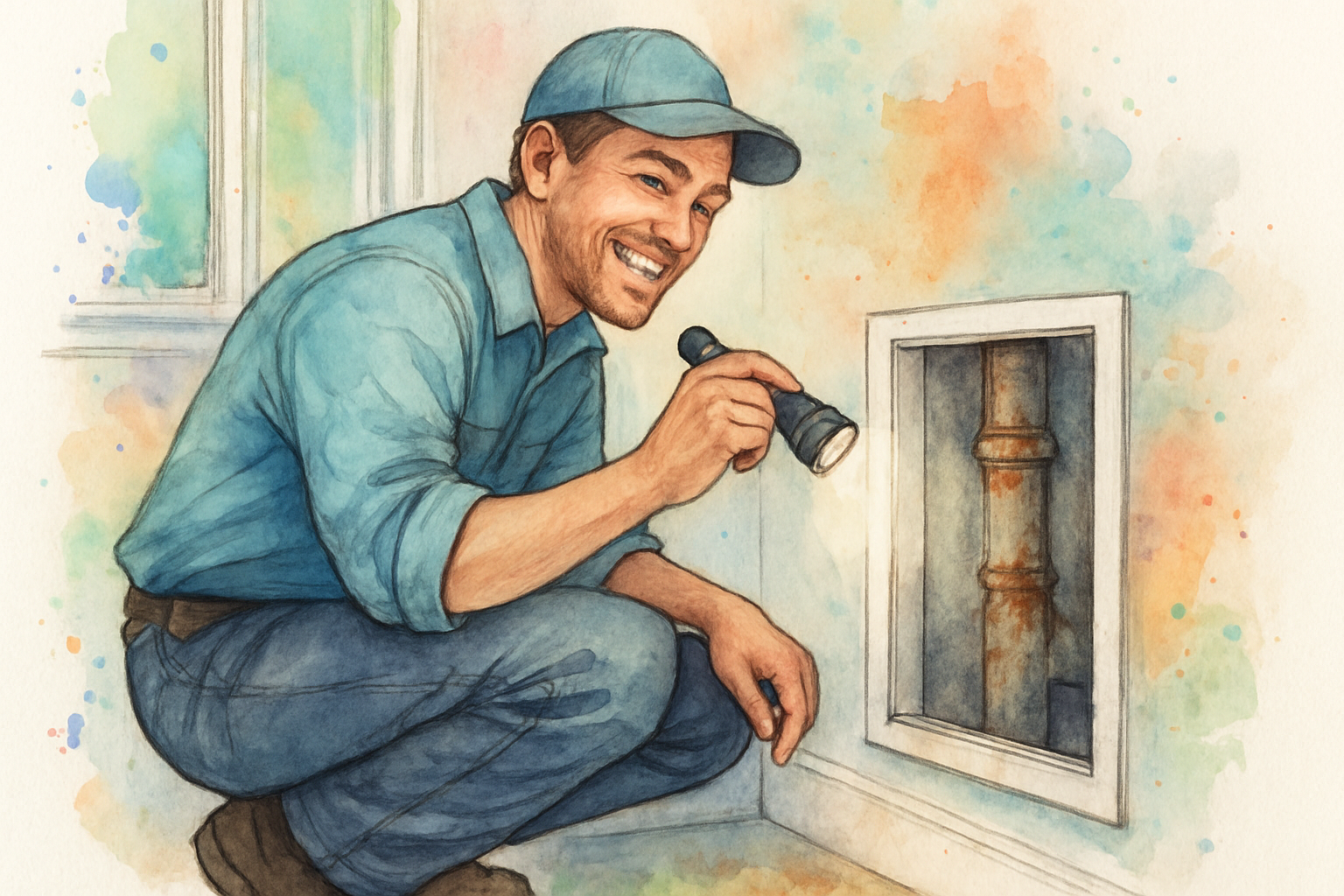
Root intrusion cannot be confirmed without a camera inspection. There’s no way to know from the surface whether you’re dealing with roots, scale buildup, a cracked joint, or a combination of all three. A sewer camera inspection sends a small camera through the drain line and gives a technician a live view of conditions inside the pipe — including exactly where a break or root intrusion is located and how far it extends.
What a homeowner should expect from this process:
- A flexible camera is fed through a cleanout access point or drain opening
- The technician identifies problem areas in real time and notes their location
- The report should tell you where the damage is, what type it is, and how far it extends — this is what drives the repair decision
- For root intrusion specifically, the inspection also shows whether roots are isolated to one joint or distributed across a longer section of line
Without this information, any repair plan is a guess.
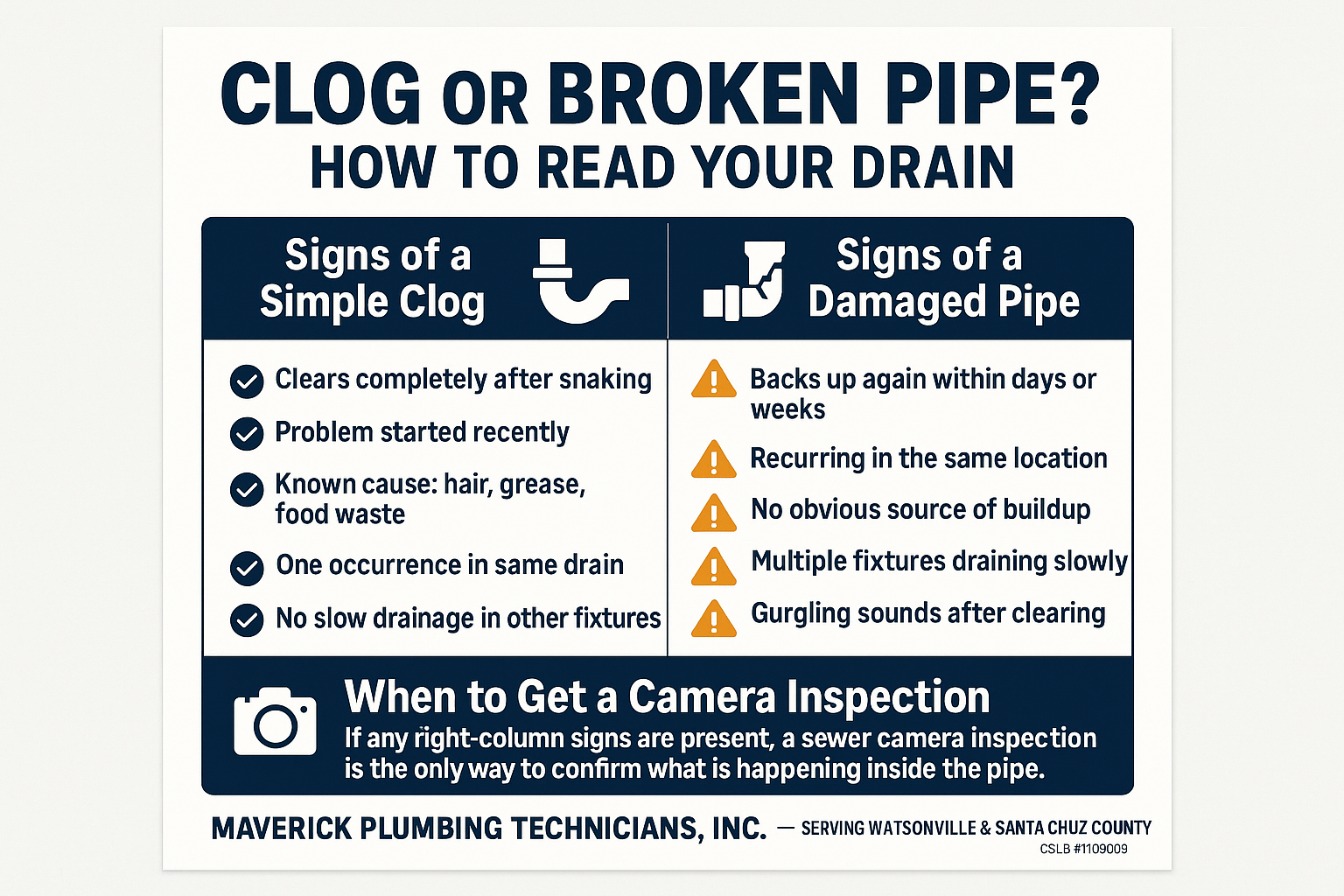
Clog vs. Broken Pipe: How to Read the Signs
This side-by-side comparison shows the key differences between a simple drain clog and a structurally damaged pipe — and what each one typically means for next steps.
Drain Line Repair vs. Sewer Line Problem: These Are Not the Same Thing
One source of confusion homeowners run into is the overlap between drain line repair and sewer line repair. These terms get used interchangeably, but they describe different scopes of work — and the difference has real consequences for what a repair involves.
A drain line refers to the pipes inside or immediately adjacent to the home that carry wastewater from individual fixtures toward the main sewer connection. A sewer line refers to the main pipe that runs from the home to the municipal sewer system, typically located under the yard.
Damage isolated to a short section of drain pipe — a single cracked joint near a bathroom, for example — may be repairable with relatively minimal disruption. The camera inspection identifies exactly where the break is, how long the damaged section is, and whether it can be addressed on its own.
When the damage extends further toward or into the main sewer line, the scope of work changes significantly. That’s a different conversation with a different set of options.
The key point is this: a homeowner doesn’t need to know which one it is before calling. That’s what the inspection is for. What matters is not assuming it’s a simple clog when the symptoms suggest something more, and not assuming it requires a full sewer replacement when it might be a localized repair. Both reactions lead to either delayed action or unnecessary expense.
For a related look at how plumbing problems escalate when left unaddressed, Is It One Clog — or a Pattern You Shouldn’t Ignore? covers how recurring issues compound over time.
Drain Problem Decision Guide
Use this table to help identify where your situation likely falls — and what the appropriate next step is.
| What You’re Seeing | Most Likely Cause | Recommended Next Step |
|---|---|---|
| Drain backed up once, cleared after snaking | Simple organic clog | Monitor — no immediate action needed |
| Same drain backed up 2+ times in weeks | Damaged pipe or root intrusion | Sewer camera inspection |
| Slow drainage in multiple fixtures at once | Main line obstruction or sewer issue | Camera inspection — call a plumber |
| Gurgling in other drains when one is used | Shared line blockage or venting issue | Professional diagnosis needed |
| Drain clears but returns with no obvious cause | Deformed, cracked, or root-invaded pipe | Camera inspection before further snaking |
| Wastewater backing up into tub or other fixtures | Serious main line blockage or break | Call a licensed plumber promptly |
Frequently Asked Questions About Drain Repair in Watsonville
How do I know if my drain problem is a clog or something more serious?
The clearest signal is recurrence. If the drain clears and then backs up again in the same spot within days or weeks — especially without an obvious cause like hair or grease — that’s a sign the pipe itself may be the problem. A one-time backup with a known cause is usually just a clog. A pattern is a different situation.
Is it okay to keep snaking the same drain?
It depends on what’s causing the blockage. If the pipe has a crack, a corroded wall, or a root intrusion, repeated snaking can chip away at already-compromised pipe structure and make things worse. Before snaking a third or fourth time in the same location, it’s worth getting a camera inspection to see what you’re actually dealing with.
What does a sewer camera inspection actually show?
The camera travels through the pipe and gives the technician a live view of conditions inside — corrosion, cracks, root intrusion, joint separation, collapsed sections, or simple buildup. The technician notes the location of any damage so repair work can be scoped accurately. It’s the only way to know for certain what’s happening inside the pipe without digging.
My drain backs up but only in one bathroom. Is that a drain line problem or a sewer line problem?
A backup isolated to one fixture or one bathroom is more likely a drain line issue — meaning the damage or obstruction is in the branch line serving that area, not the main sewer line. But the only way to confirm this is with an inspection. A localized problem is generally a simpler repair than a main line issue, which is why it’s worth identifying early.
Can tree roots really get into a drain pipe if I don’t see any trees directly over it?
Yes. Root systems extend well beyond the visible canopy of a tree, and roots follow moisture rather than growing straight down. In established Watsonville neighborhoods, mature trees may have roots traveling 20 to 30 feet from the trunk. A pipe joint that has shifted even slightly is enough of an opening for a root to enter and establish itself.
Do I need to replace the entire sewer line if roots are found?
Not necessarily. If root intrusion is isolated to one joint or a short section of pipe, repair may be limited to that area. If roots have spread through a longer section or the pipe itself is severely deteriorated, the scope expands. The camera inspection report is what tells you which situation you have — and that’s where any honest repair conversation should start.
Not Sure What You’re Actually Dealing With?
If you’re in Watsonville or anywhere in Santa Cruz County and the same drain keeps giving you problems, Maverick Plumbing Technicians, Inc. can run a camera inspection to show you exactly what’s happening inside the pipe — before any repair decision gets made. We’re a licensed and insured plumbing contractor (CSLB #1102966) with 24/7 emergency service available. Call us at (831) 515-9903 or reach out through maverickplumbingtechnicians.com to schedule a diagnostic visit.
