Direct Answer: A single slow drain is often a local clog you can clear yourself. But multiple drains backing up, recurring blockages, or gurgling sounds point to a deeper problem that needs a professional.
The question I hear more than almost any other is some version of this: ‘Do I actually need a plumber, or can I handle this myself?’ It’s a fair question, and I’d rather give you a straight answer than have you waste money on a service call you didn’t need, or spend two weeks pouring chemicals down a drain that has a root growing through it.
Here in Watsonville and throughout Santa Cruz County, drain problems are one of the most common reasons homeowners call us. And the truth is, not every slow drain is a crisis. But some slow drains are hiding something that won’t get better on its own. Knowing the difference is what this article is about.
I’m going to walk through what your symptoms actually mean, what professional drain cleaning does that a store snake or bottle of liquid drain cleaner can’t, and how hard water specific to this part of the Central Coast plays into why some drains in this area seem to clog every few months without a clear reason.
One Slow Drain vs. Multiple Drains: These Are Not the Same Problem
This is the first thing I want you to understand, because it completely changes what needs to happen next.
A single slow drain, say, the bathroom sink is draining sluggishly but everything else is fine, is almost always a local blockage. Hair, soap buildup, a gunked-up stopper, or debris sitting right at the P-trap. That’s a shallow problem. A plunger, a hand-crank drain snake, or even careful manual cleaning of the stopper mechanism can solve it. I’m not going to tell you to call a plumber for that if you’re comfortable trying it first.
But when multiple fixtures start misbehaving at the same time, that’s a different situation entirely. Watch for:
- The toilet gurgles when the washing machine finishes draining
- The shower backs up when someone runs the kitchen sink
- Water comes up through a floor drain after flushing a toilet
- A slow drain appears in two or more completely separate parts of the house at once
These are signs of a mainline blockage or a sewer lateral problem. The connection between your home’s plumbing and the municipal sewer system is a single shared pipe, and when that line is partially or fully blocked, every fixture that drains into it will show symptoms. Snaking one sink won’t touch it.
I’ve written more about how to tell these two scenarios apart if you want to dig deeper into the diagnostic side.
What a Store-Bought Snake Actually Does (and Where It Stops)
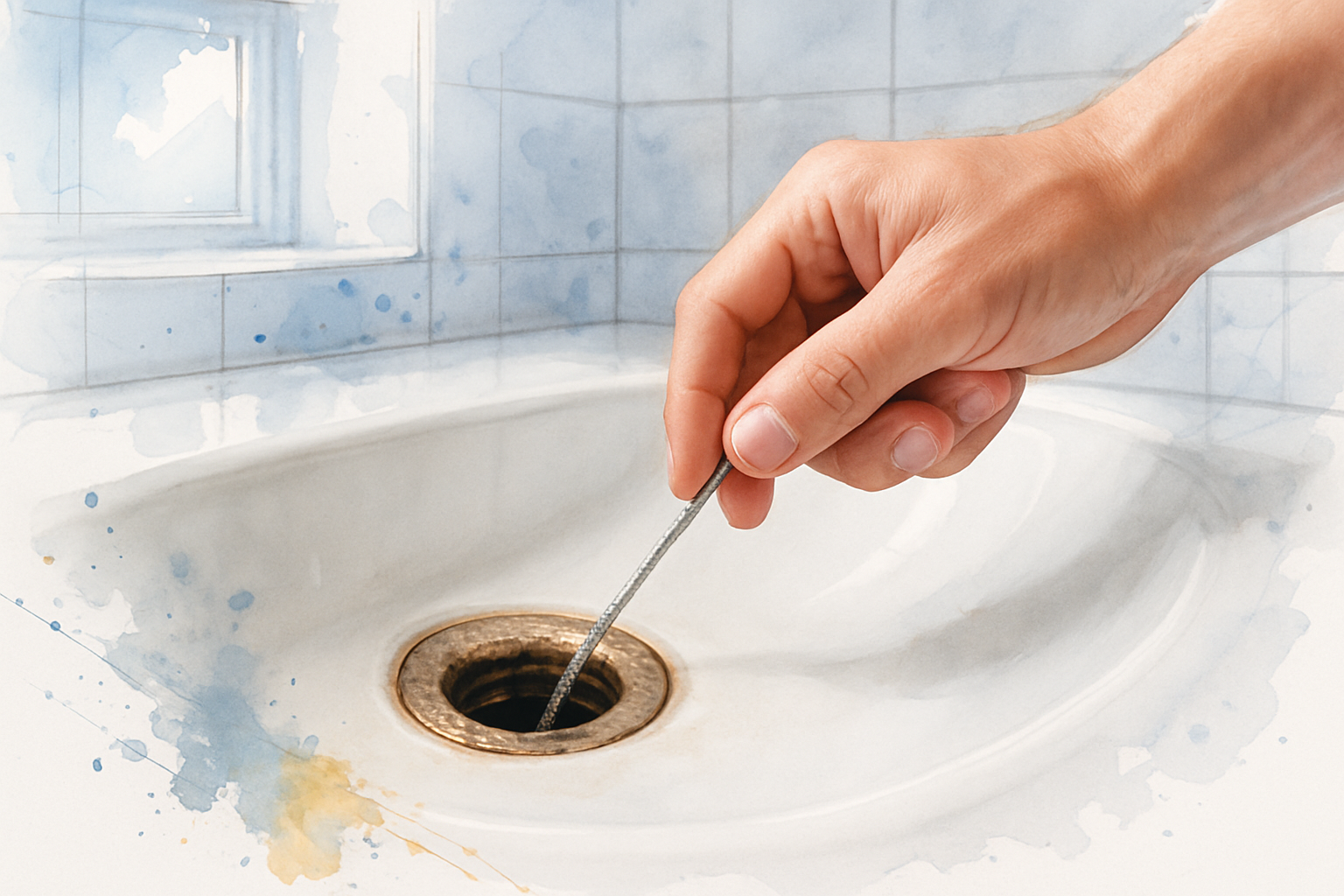
I want to be honest about this because the hardware store options aren’t useless. A hand-crank snake or a basic drum auger can absolutely clear a soft clog that’s sitting 2 to 3 feet inside a drain line. If you’ve got a wad of hair just past the stopper, a hand snake is going to do the job.
But here’s where it runs out of reach. The grease buildup coating your kitchen drain 20 feet down? A hand snake punches a hole through it at best. The roots growing into your sewer lateral out near the street? A hand snake doesn’t touch them. Liquid drain cleaners are even more limited. They can dissolve soft organic material right at the drain opening, but they don’t reach far, they don’t cut through scale, and they can damage older pipes with repeated use.
Professional drain cleaning is different in two meaningful ways:
- Electric sectional snaking uses a powered, rotating cable that can reach 50 to 100 feet into a line and has enough torque to break up compacted clogs and root intrusions that a hand tool can’t budge.
- Hydro jetting uses a high-pressure water stream to scour the full interior wall of the pipe, removing grease, mineral scale, and debris from the pipe surface rather than just punching through the middle of a blockage.
Hydro jetting is why a drain that kept coming back every few months often stops recurring after a professional service. The clog isn’t just cleared, the pipe wall is clean, so buildup has nowhere to grip.
If you’re wondering whether the same drain keeping coming back is a sign of something more persistent, this article on recurring drain backups explains what’s usually behind it.
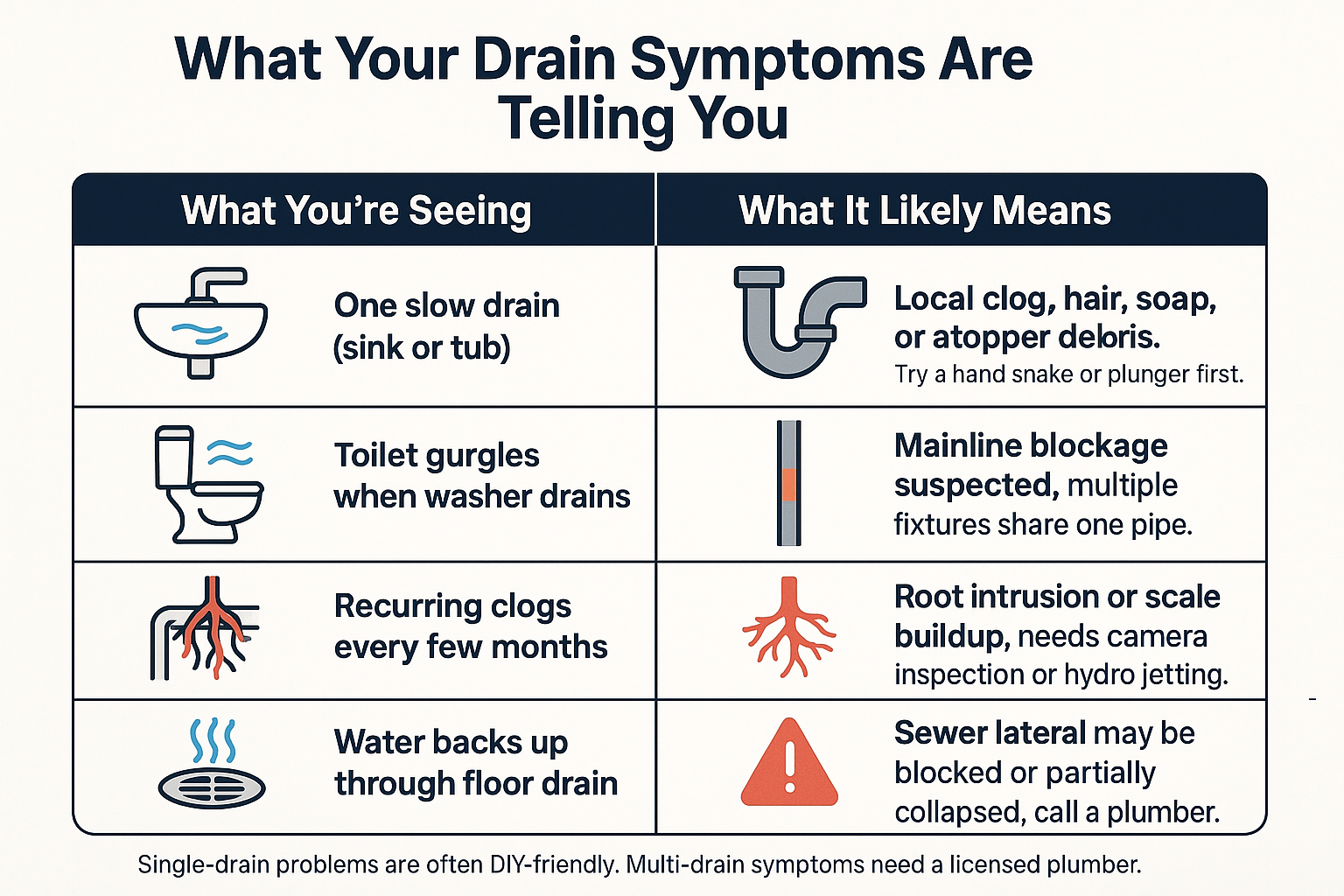
What Your Drain Symptoms Are Actually Telling You
This breakdown maps the most common drain symptoms to their likely cause and what level of response each one calls for.
Why Hard Water Makes Drain Problems Worse Here
Santa Cruz County has hard water. Most homeowners know it coats their showerheads and leaves spots on glassware. What fewer people think about is what it does inside the drain pipes they can’t see.
Mineral scale from hard water builds up on the interior walls of drain lines the same way it coats a faucet aerator. Over time, that buildup narrows the pipe’s diameter. A narrower pipe collects grease and debris faster, and clogs form more easily. This is a real reason why a drain that cleared without any trouble a couple of years ago now seems to back up every few months.
It’s also why a single clearing, even a professional one, sometimes isn’t enough for older Watsonville homes with galvanized or cast iron pipes. The scale is on the walls, not just blocking the middle. Hydro jetting addresses this in a way that snaking doesn’t, because the water pressure actually contacts and removes the pipe wall buildup rather than just pushing through it.
The UC Agriculture and Natural Resources water quality program has documented water hardness across California regions, Santa Cruz County consistently sits in the hard-to-very-hard range, which tracks exactly with what we see on the job.
What Happens If You Wait It Out
I’m not in the business of scaring anyone. But I do want to give you the practical picture on timing, because waiting on the wrong kind of drain problem can turn a manageable service call into a much bigger situation.
A soft clog, like grease buildup in a kitchen drain, can harden and compact further over days or weeks, especially if hot water is run through it. What started as something a snake could break up might eventually need hydro jetting or even pipe inspection.
A root intrusion doesn’t stop growing. Roots enter lateral pipes through tiny cracks or joint gaps and keep expanding. A partial blockage that gives you slow drains today will become a full backup if the root mass isn’t cleared and the pipe is checked for damage.
The scenario that comes up in our calls more than I’d expect involves rental properties and vacation homes. A slow drain that an owner would have noticed and dealt with gets ignored for weeks while no one is on-site. By the time someone reports it, there’s water on the floor, potential water damage to cabinets or flooring, and a much more involved repair. If you manage a property and a tenant mentions a slow drain, it’s worth getting eyes on it quickly.
For help thinking through whether a drain issue crosses the line into genuine emergency territory, this guide on urgent vs. wait-until-morning plumbing walks through the decision clearly.
DIY vs. Professional Drain Cleaning: What Each Handles
Use this as a quick reference when you’re deciding whether to try it yourself or pick up the phone.
| Situation | DIY Tool | What It Handles | When to Call a Pro |
|---|---|---|---|
| Single slow bathroom drain | Plunger or hand snake | Hair, soap, debris at P-trap | If it doesn’t clear after 2 attempts |
| Kitchen drain draining slowly | Boiling water or short drain snake | Light grease near opening | If it backs up again within a week |
| Gurgling toilet or multiple slow drains | Nothing effective at home | Does not address mainline issues | Immediately, this needs camera inspection or snaking from cleanout |
| Recurring clogs every few months | Temporary at best | Clears the middle, leaves scale | Hydro jetting to clean pipe walls |
| Root intrusion suspected | No DIY solution | Roots require mechanical cutting | Call a licensed plumber for camera inspection and clearing |
When a Camera Changes Everything
I want to mention camera inspection here because it comes up specifically when the drain symptoms don’t match a simple explanation.
A sewer camera inspection sends a waterproof camera through the drain line and transmits live video of what’s inside the pipe. It’s how we know whether a slow drain is caused by a soft grease blockage, a root mass, mineral scale, a crack, or a section of pipe that has shifted or partially collapsed.
This matters because those problems don’t respond to the same fix. Snaking through a cracked or collapsed section doesn’t repair the structural issue, it just clears material temporarily while the underlying cause gets worse. If your drain is cleaned and the problem comes back within a few weeks, a camera inspection is usually the next logical step.
For a full breakdown of what a camera inspection actually reveals and when it’s warranted, this article explains it in detail.
And if you’re in the process of selling a home in Santa Cruz County, a sewer camera inspection before listing is worth understanding, your sewer lateral is your responsibility as the seller, and many buyers now request it as part of the transaction.
Frequently Asked Questions About Drain Cleaning in Watsonville
My washer drained and water flooded the laundry room floor. Is that just a clog?
It might be, but don’t assume it’s minor. A washing machine discharge a large volume of water quickly, and if the standpipe or laundry drain can’t keep up, it overflows. That could be a soft clog close to the surface, but it could also point to a deeper blockage in the line or a venting problem that’s preventing the drain from clearing fast enough. If it happened once and the drain seems clear now, watch it. If it happens again, have a plumber run a snake or camera through the laundry drain line before you end up with a flooded floor and water damage to deal with.
I poured liquid drain cleaner down the drain and it didn’t help. What now?
Liquid drain cleaners work on soft organic clogs very close to the drain opening. If the product didn’t move the problem, the clog is likely farther down the line, harder in composition, or something the chemical simply can’t dissolve, like a root or a collapsed section. At this point, a hand snake or a professional drain cleaning is the next step. Repeated applications of chemical drain cleaner on a pipe that isn’t clearing can also degrade older pipe materials over time.
How do I know if I have root intrusion versus just a regular clog?
You usually can’t tell without a camera. The symptoms of root intrusion can look similar to a standard blockage at first: slow drains, occasional backups, a gurgling toilet. But roots grow back after snaking, so the clue is usually recurrence. If you’ve had the same drain cleaned professionally and it’s backing up again within a few weeks or months, root intrusion or pipe damage is a likely explanation. A sewer camera inspection is the only way to know for certain what’s inside the line.
Can I prevent drain clogs from coming back so often?
To some degree, yes. Keeping grease out of kitchen drains, using a hair catcher in shower and tub drains, and running hot water after use all reduce buildup. But in Santa Cruz County specifically, hard water mineral scale is a background factor that accumulates regardless of what you put down the drain. Homes with older pipes and recurring clogs sometimes benefit from periodic hydro jetting to keep the pipe walls clear, rather than waiting for a full backup to happen.
My toilet is gurgling but nothing is actually backed up yet. Should I wait?
I wouldn’t wait long. A gurgling toilet is the pipe system telling you there’s a pressure or blockage issue in the shared drain line. It means air is moving through the water in the trap when it shouldn’t be. That symptom often precedes a full backup by days, not weeks. It’s a good time to call and have the mainline checked before the situation escalates into something more disruptive.
Not Sure What Your Drain Is Telling You?
If you’re dealing with a slow drain, a recurring backup, or multiple fixtures acting up at once in Watsonville or anywhere in Santa Cruz County, we’re available to take a look. Maverick Plumbing Technicians, Inc. is a licensed and insured plumbing contractor (CSLB #1102966) serving residential and commercial customers throughout the area, with 24/7 emergency service available when the situation can’t wait. Call us at (831) 515-9903 or reach out through maverickplumbingtechnicians.com to schedule a service visit or talk through what you’re seeing.
