

Direct Answer: If you smell gas, leave the building right away. Do not touch light switches, use a phone inside, or open the garage door. Call for help from outside, away from the house.
Most plumbing problems give you time to think. A slow drain, a running toilet, even a water heater that quits on a Friday night will wait while you figure out your next step.
A natural gas odor inside your home is different. It is one of the few situations connected to plumbing where the correct first action has nothing to do with calling a plumber.
I am writing this for the homeowner in Watsonville, Santa Cruz, or anywhere in Monterey County who is reading calmly, before anything has happened. If you smell gas right now, stop reading, get outside, and call from there.
The One Right First Move When You Smell Gas
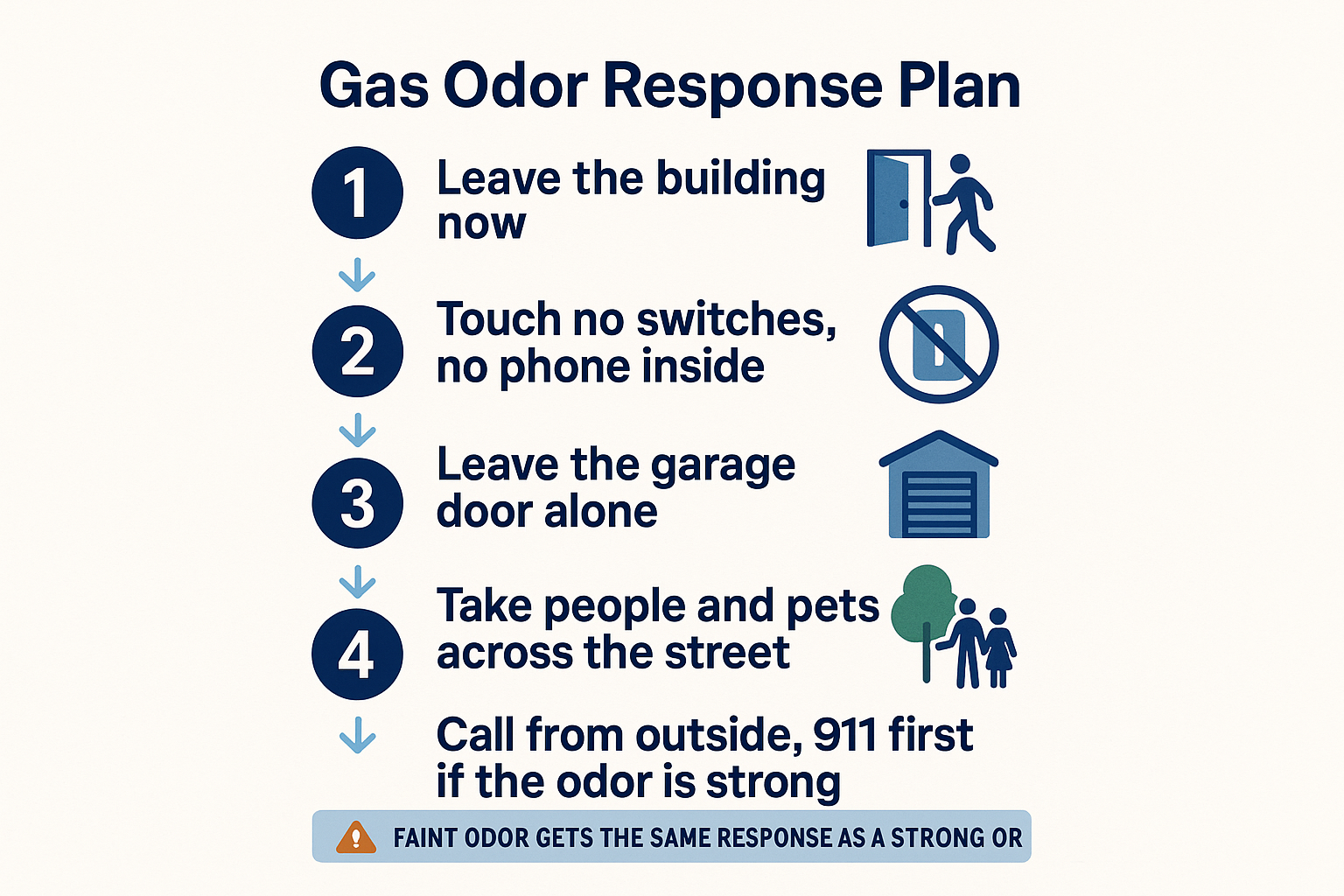
Leave the building immediately. That is the whole first step, and everything else comes after you are outside.
On the way out, do not do any of the following:
- Do not turn light switches on or off. A switch makes a small spark.
- Do not use your phone inside the building. Take it with you and dial once you are outdoors.
- Do not open or close the garage door. The opener motor is an ignition source.
- Do not light anything, including a stove burner, candle, or lighter.
- Do not try to find the leak. Sniffing around the water heater or behind the range wastes the only thing that matters, which is distance.
Walk out. Take anyone else in the house and any pets with you. Get well away from the structure, ideally across the street or at a neighbor’s.
Then call. If the odor is strong, call 911 first and your gas utility second. Once the property has been made safe and cleared, that is the point where a licensed plumbing contractor with gas line experience comes into the picture.
I know that sequence sounds obvious written down. Under stress, in your own kitchen, with dinner on the stove, it is not obvious at all. That is exactly why it is worth reading now.
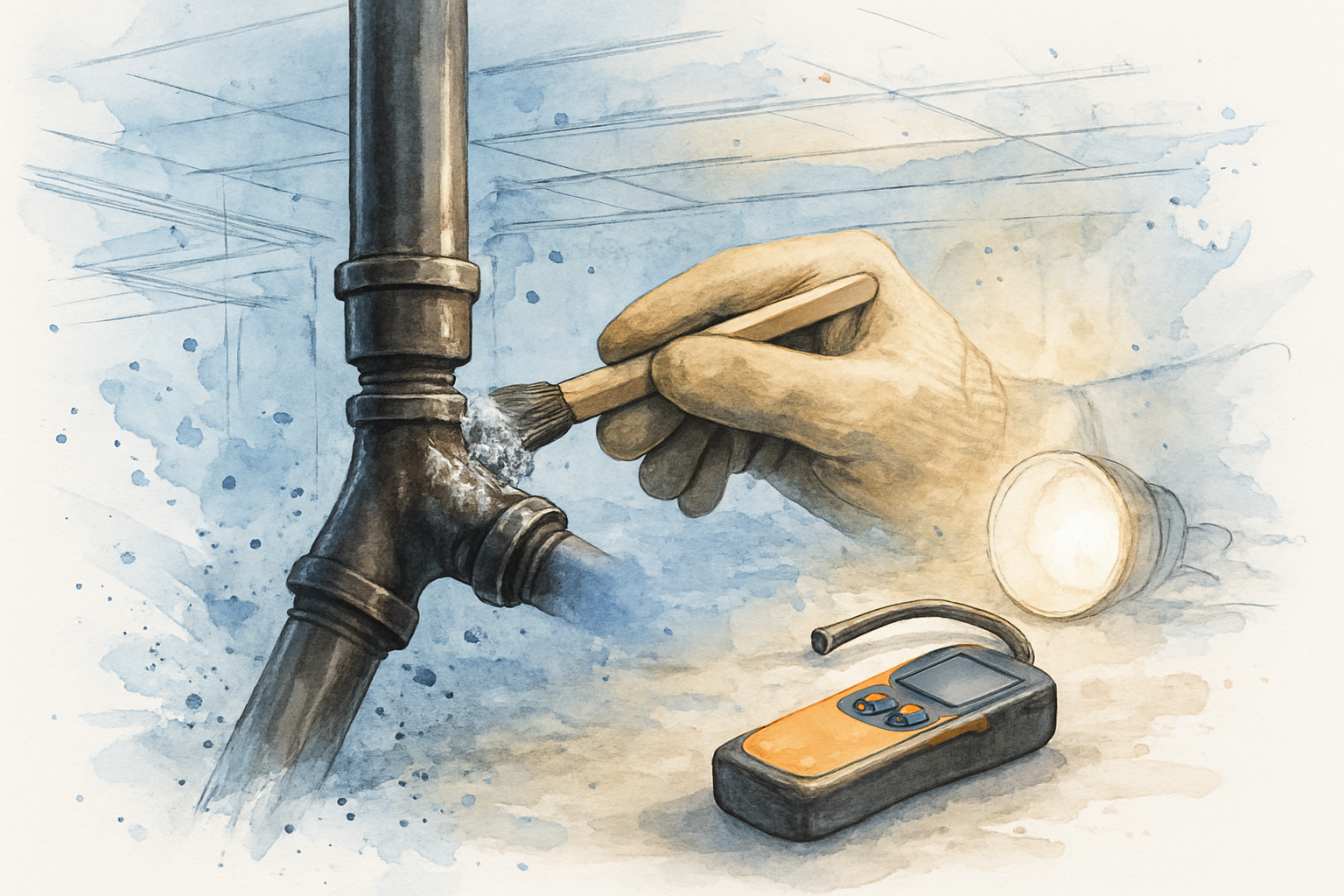
A Faint Smell Deserves the Same Response as a Strong One
The most common reason people delay is doubt. They are not sure the smell is really gas, or it seems too faint to be a big deal, so they wait and see if it gets worse.
Here is why that reasoning falls apart. Natural gas has no odor of its own. The rotten egg smell you recognize comes from mercaptan, a chemical added on purpose so people can detect a leak with their nose.
That means any detectable odor is the safety system working exactly as designed. Faint is not the same as harmless.
A slow leak inside an enclosed space, like a closet water heater, a laundry room, or a crawl space under an older Watsonville home, can build to an ignitable concentration without any visible sign. No hissing, no damage, nothing to see. Safety groups including the National Fire Protection Association treat any gas odor indoors as a reason to evacuate, not a reason to investigate.
So the rule I give every customer is simple: one smell, one response. Strong odor, faint odor, on and off odor. Same move every single time. You leave, then you call.
If you are wrong and it turns out to be something else, nothing is lost. If you are right and you waited, the outcome is not recoverable.
Your Gas Odor Response Plan, In Order
This is the sequence worth walking through with everyone in your household before you ever need it.
Who Is Responsible for Which Part of the Gas System
This is the part most homeowners never think about until they are standing in the driveway with a problem.
The gas utility owns and maintains the service line running to your property and the meter itself. Anything downstream of the meter, meaning the piping that carries gas into and through your building and to each appliance, is the property owner’s responsibility.
So when a utility technician shuts the gas off at the meter and tells you the leak is on your side, they are done and you are not. That repair falls to a licensed plumbing contractor.
On older homes around Santa Cruz County, the failure points I see most often are threaded joints on aging black iron, corroded pipe running through damp crawl spaces, and appliance connectors that were never meant to last forever. If your home still has original galvanized or iron piping throughout, that same age story applies to your water lines too, which is worth reading about in how to know if your home needs repiping.
Utility Side vs. Homeowner Side
A quick reference for where the responsibility line falls on a typical residential property.
| Part of the system | Typically responsible | What that means for you |
|---|---|---|
| Street main and service line to the meter | Gas utility | Report the odor, they respond and can shut off supply |
| The meter and its shutoff | Gas utility | Do not attempt repairs or modifications yourself |
| Piping from the meter into the building | Property owner | Requires a licensed contractor to locate and repair |
| Piping inside walls, crawl spaces, and attics | Property owner | Often where corrosion and joint failures show up |
| Appliance connectors at the range, dryer, water heater | Property owner | Common failure point, replaced during repair work |
What Happens After the Property Is Cleared
Once the building has been evacuated and the utility has made the site safe, the diagnostic work begins. This is where a licensed plumbing contractor with gas line experience takes over.
The work generally moves in this order:
- Locate the source, using pressure testing on the system and leak detection at joints, connectors, and appliance drops
- Assess the affected line, which decides whether a section repair or a larger replacement is the right call
- Complete the repair to California plumbing code, then retest before gas is restored
Maverick Plumbing handles gas leak repair as a 24 hour, 7 day a week service, because these calls do not schedule themselves for Tuesday morning. The company is licensed and insured under CSLB #1102966, which is the license number worth verifying on any contractor you let near a gas line.
One related note for homeowners planning ahead: gas appliance rules in California are shifting, and that affects replacement decisions on water heaters. I covered that in detail in what Watsonville homeowners should know about gas water heater rules.
And if what you are actually chasing is a water problem rather than a gas one, your water meter can tell you a lot before you open a single wall.
Frequently Asked Questions About Gas Leak Safety at Home
Should I shut off the gas at the meter myself before I leave?
No. Leave the building first. Turning the meter valve requires a wrench and puts you standing next to the gas source, and restoring service afterward has to be done by the utility. Get outside and let the utility handle the shutoff.
What if I only smell it near the stove and nowhere else?
Treat it the same way. A localized odor can mean a burner was left slightly open, a pilot went out, or a connector is failing, and you cannot tell which one from the smell. Leave the building and call from outside.
Do I call the gas utility or a plumber first?
The utility, or 911 if the odor is strong. They respond to make the property safe and shut off supply. A licensed plumber comes in afterward if the leak is on the piping you own, meaning anything past the meter.
Can a gas leak happen with no smell at all?
It is possible in rare cases, such as a leak underground where soil filters the odorant out. Other warning signs include a hissing sound near a line, dead patches of vegetation over a buried line, and pilot lights that keep going out.
Is gas leak service available at night and on weekends?
Yes. Gas leak response is available 24 hours a day, seven days a week, which matters because these situations rarely land during business hours.
Have your plan ready before you need it
The homeowners who handle a gas odor well are the ones who decided what to do long before it happened. Walk the steps with your household, and note who you would call once you are standing outside.
We handle gas leak repair for homes and businesses across Watsonville, Santa Cruz County, and Monterey County, with response available around the clock. When you are safely outside and ready for the repair side of the conversation, our line is (831) 515-9903.
