Direct Answer: A drain snake clears a blockage but doesn’t fix what caused it. If the same drain keeps backing up, snaking is only buying time, a camera inspection or hydro jetting is likely what’s actually needed.
You had the drain snaked. It worked for a few weeks, maybe a couple of months. Then it backed up again. You called again, had it snaked again, and here you are, wondering why the same drain keeps failing.
This pattern is one of the most common calls we get from homeowners in Watsonville and across Santa Cruz County. And the answer almost never is, ‘you just need to snake it one more time.’ When a drain keeps coming back, the clog itself isn’t the problem, it’s a symptom of something happening deeper in the line.
In this article, I want to walk through why snaking has limits, what hydro jetting actually does differently, and why a sewer camera inspection is often the most important step before any cleaning method is chosen. If you’ve had the same drain snaked two or three times in the past year, this is worth reading.
Why Snaking Works, and Where It Stops
A drain snake is a long flexible cable that a plumber feeds into a pipe to break apart or pull out whatever is blocking it at that moment. For a straightforward clog, a clump of hair, a wad of soap buildup, a foreign object, a snake is often exactly the right tool. It clears the immediate problem quickly.
But here’s what a snake cannot do: it cannot remove the material coating the interior walls of a pipe. It punches through the blockage. The buildup on either side stays right where it is.
For homeowners in Watsonville’s older neighborhoods, this matters more than it might elsewhere. Many homes built before the 1980s have original clay or cast-iron sewer laterals, pipe materials that were never designed to last indefinitely. Over the decades, those pipes develop small cracks, joints that shift, and surface roughness that catches grease and debris more easily than smooth modern pipe. Add hard water, which deposits mineral scale along pipe walls over time, and you end up with a line that restricts more with every passing year. A snake clears the center of that pipe. The walls stay compromised.
The most common mistake I see after a clog clears is a homeowner assuming the problem is solved. It felt solved. The water drained. But if that same fixture backs up within a few months, the snake didn’t fix anything, it just reset the clock. That pattern is the real story, not the individual clog.
If you want to understand more about what separates a slow drain from one that actually needs repair, this piece on the difference between a slow drain and a drain that needs repair breaks it down clearly.
What Hydro Jetting Does That a Snake Can’t
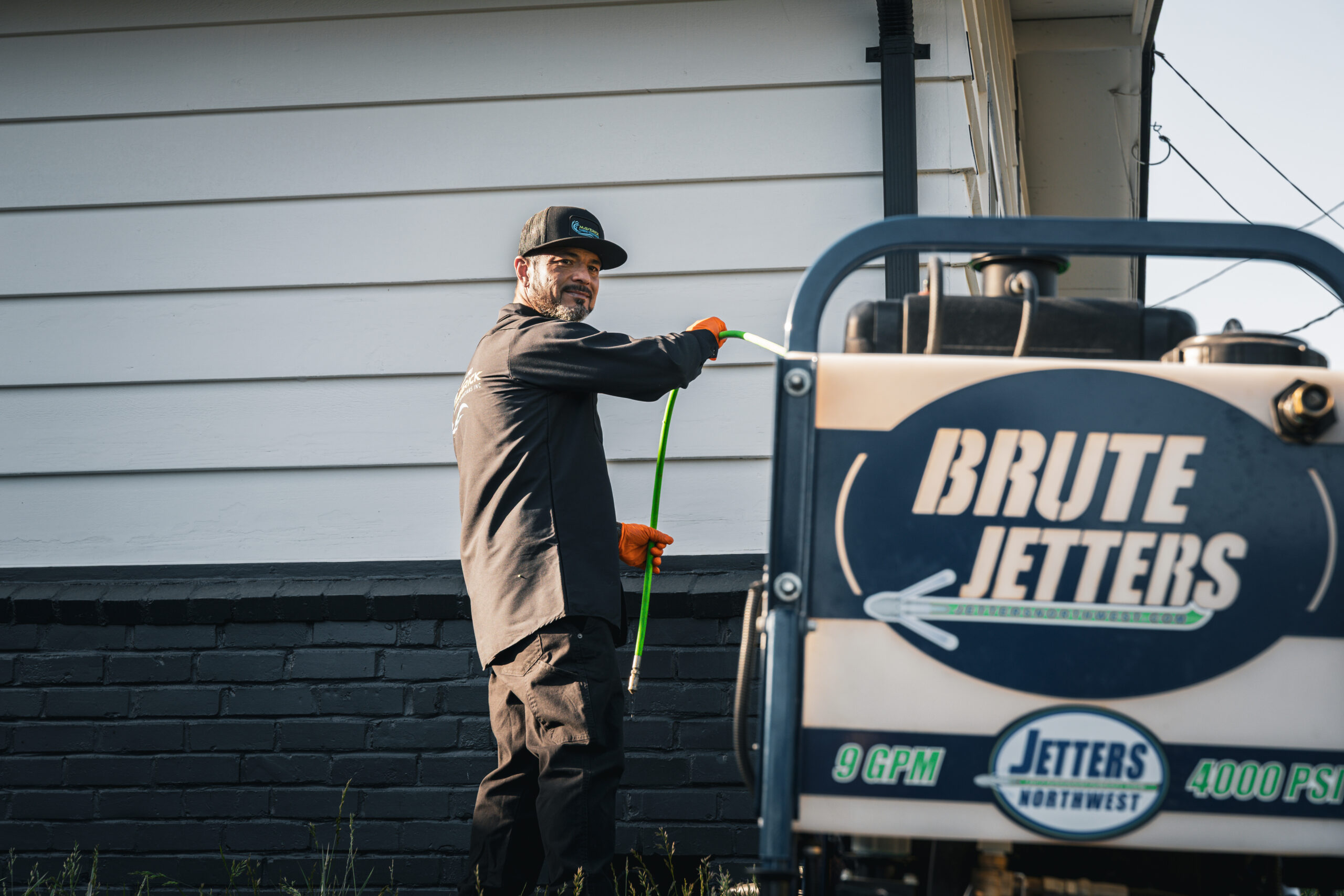
Hydro jetting uses pressurized water, often at 3,000 PSI or higher, pushed through a specialized nozzle to scour the interior walls of a pipe rather than just punch through a blockage. Where a snake might break apart a grease clog at the center of the pipe, a hydro jet strips the grease off the wall from a section of pipe entirely. That’s a meaningful difference if grease accumulation is why the line keeps backing up.
For homes in Watsonville where cooking oil has gone down a kitchen drain for years, or where root tendrils have started working their way into an aging lateral, hydro jetting removes material that no snake ever touches.
That said, hydro jetting is not always the right first move. In older pipe materials that are already compromised, that level of pressure can cause more harm than good, accelerating a fracture that might have held for a few more years otherwise. A licensed plumber should assess the condition of the line before recommending it. Which brings me to the more important point.
For context on what factors are driving recurring clogs in Watsonville specifically, the article on why Watsonville drains clog faster than you’d expect covers the local conditions in detail.
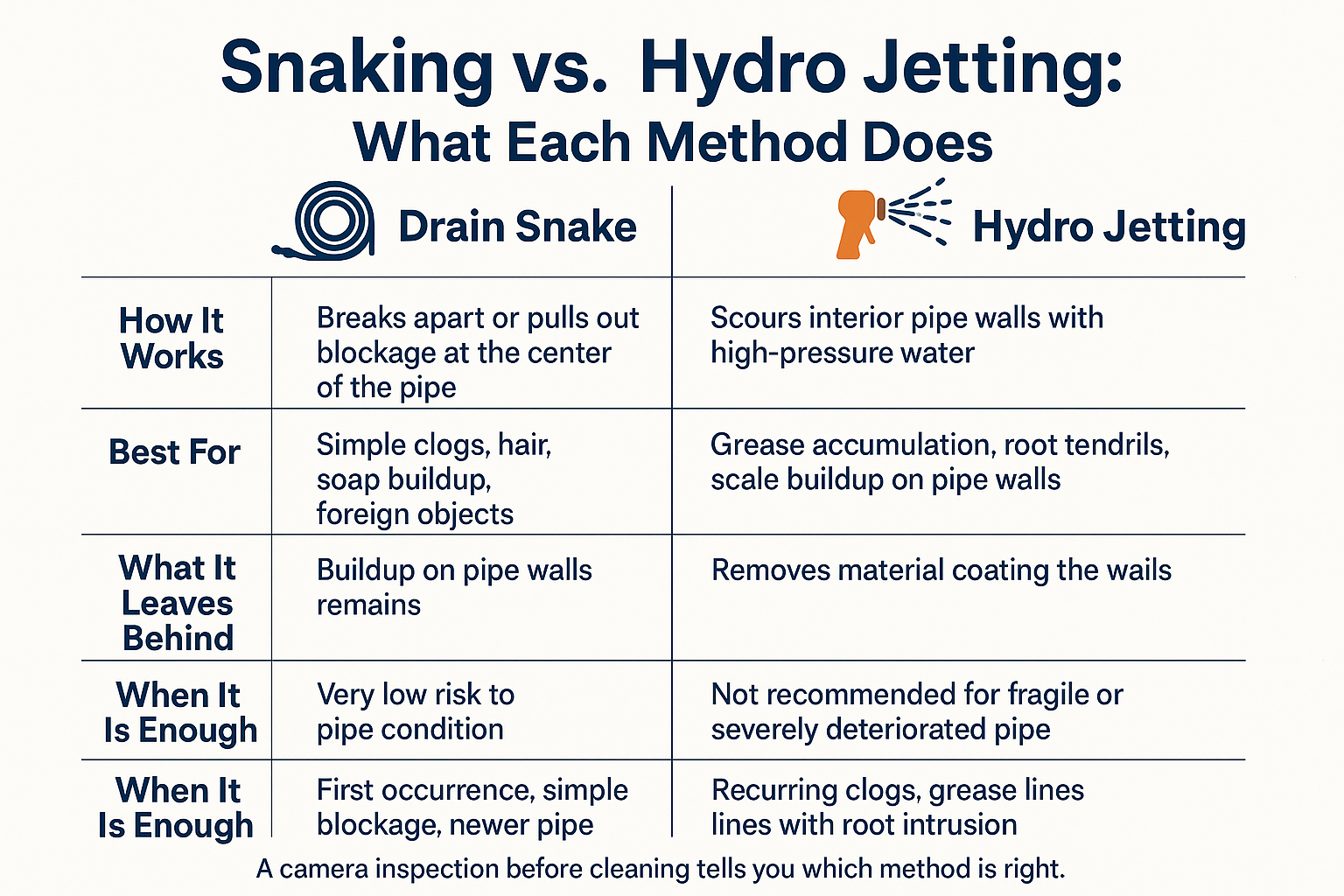
Snaking vs. Hydro Jetting: What Each Method Actually Does
This comparison shows where each drain cleaning method works well and where it falls short, useful for understanding which approach fits your situation.
The Camera Inspection Is Not a Last Resort
This is the point I find myself making most often with homeowners who have had the same drain snaked multiple times: a sewer camera inspection is not something you do after everything else fails. It is a diagnostic tool that tells you what you are actually dealing with before any cleaning method is chosen.
When I run a camera into a line that a homeowner describes as a drain that keeps backing up every few months, I frequently find one of a handful of things:
- A belly in the pipe, where a section has settled and water pools rather than flows through
- Root intrusion, where tree roots have entered through a cracked joint or deteriorated section and are growing inside the line
- A partial collapse or fracture in the pipe wall, often in clay laterals that have shifted over time
- Heavy scale buildup from years of hard water that has narrowed the pipe’s interior significantly
Any one of these causes repeated clogging. And none of them get fixed by running a snake through again. Without camera footage, each cleaning is a temporary fix on an undiagnosed problem, you’re addressing the symptom every few months rather than finding out what is actually wrong.
For a deeper look at what a camera inspection actually reveals and when it makes sense, the article on what a sewer camera actually shows is worth reading before you decide on your next step.
Watsonville’s older residential streets, particularly neighborhoods built out in the 1950s through 1970s, have sewer laterals in some cases that have never been inspected since the homes were built. Root systems from established trees in those yards are drawn toward any moisture source in an aging, cracked line. This is not a theoretical concern. It shows up consistently in drain calls across Santa Cruz County and is a big part of why recurring clogs here often point to a structural issue rather than just household habits at the sink. The California State Water Resources Control Board provides guidance on sewer lateral compliance and maintenance standards that are relevant for homeowners in the region.
What Recurring Clogs Usually Indicate
When a drain keeps backing up, the pattern often points to a specific underlying cause. This table shows the most common ones we find in Watsonville and Santa Cruz County homes.
| Clog Pattern | Likely Cause | Appropriate Next Step |
|---|---|---|
| Same kitchen drain backs up every 1-3 months | Grease accumulation on pipe walls | Camera inspection, then hydro jetting if pipe condition allows |
| Multiple fixtures backing up at once | Main sewer line blockage or partial collapse | Camera inspection of the main line before any cleaning |
| Slow drainage that worsens over time | Mineral scale buildup or belly in the pipe | Camera inspection to confirm pipe condition and location |
| Drain clears after snaking, fails within weeks | Root intrusion through a cracked lateral | Camera inspection to locate breach, then root clearing or repair |
| Older home, first-time persistent clog | Deteriorated clay or cast-iron lateral | Camera inspection before any high-pressure cleaning is attempted |
When Multiple Drains Back Up at Once
There is a meaningful difference between one drain that keeps giving you trouble and multiple fixtures backing up at the same time. If your kitchen sink, a bathroom sink, and the toilet all start draining slowly or backing up together, that is almost never a localized clog. It points to something happening deeper in the main sewer line, and it needs to be treated differently.
A snake run into a single fixture will not address a problem in the main lateral. And in some cases, continuing to run water through a line with a partial collapse or significant blockage lower in the system makes the situation worse by forcing waste into areas it shouldn’t go.
The article on one slow drain vs. every drain backing up explains this distinction in more detail. If you are seeing multiple fixtures affected at once, that is the situation where calling a licensed plumber before doing anything else is the right call.
Frequently Asked Questions About Recurring Drain Clogs
My drain was snaked two months ago and it’s backing up again. Does that mean something is wrong with my pipes?
Not necessarily broken, but almost certainly not fine either. When the same drain backs up within a few months of being snaked, the snake cleared the immediate blockage but didn’t address whatever is causing material to accumulate there in the first place. That could be grease buildup, root tendrils growing in through a crack, a belly in the line, or narrowing from mineral scale. A camera inspection is usually the right next step, it tells you what is actually there before you spend more money on another temporary fix.
Is hydro jetting safe for older pipes?
It depends on the condition of the pipe. Hydro jetting at high pressure is very effective on grease and root buildup, but it can accelerate damage in a pipe that is already cracked, severely deteriorated, or fragile. That is exactly why a camera inspection before jetting matters, it lets a plumber assess the pipe’s condition and decide whether hydro jetting is appropriate or whether a different approach is safer.
How do I know if I need a camera inspection or just another snaking?
If the drain has backed up more than once in the past six months after being cleaned, or if multiple fixtures are draining slowly at the same time, a camera inspection is worth having before any more cleaning is done. Repeated snaking without a diagnosis is treating the same symptom over and over without knowing what is causing it.
Can tree roots really get into a sewer line in a residential yard?
Yes, and it is more common in Watsonville’s older neighborhoods than most homeowners expect. Tree roots follow moisture, and a small crack or deteriorated joint in an aging clay or cast-iron lateral is enough of an opening for roots to work their way in. Once inside, they grow and eventually cause significant blockage or pipe damage. Established trees near sewer laterals, especially in yards with original pre-1980s infrastructure, are a realistic source of recurring drain problems.
What if a camera inspection finds a broken section of pipe?
Then you know exactly what you are dealing with and where it is, which puts you in a much better position than guessing. Depending on the location and severity, a licensed plumber can recommend spot repair, pipe lining, or section replacement. Knowing the condition of your line up front also means you are not paying for hydro jetting on a pipe that actually needs structural repair first.
Ready to Find Out What Is Actually Causing the Problem?
If you have had the same drain snaked more than once in the past year without lasting results, we can take a look at what is actually going on in that line. We serve homeowners throughout Watsonville, Santa Cruz, and across Santa Cruz County, and we are available 24 hours a day, seven days a week for situations that can’t wait. Call Maverick Plumbing Technicians, Inc. at (831) 515-9903 or request service through maverickplumbingtechnicians.com, and let’s get you an actual answer instead of another temporary fix.
