

Direct Answer: A slab leak can often be spot repaired, but homes with aging galvanized pipe and repeat leaks usually need a repipe. Have the leak located first, then plan the work before an emergency forces it.
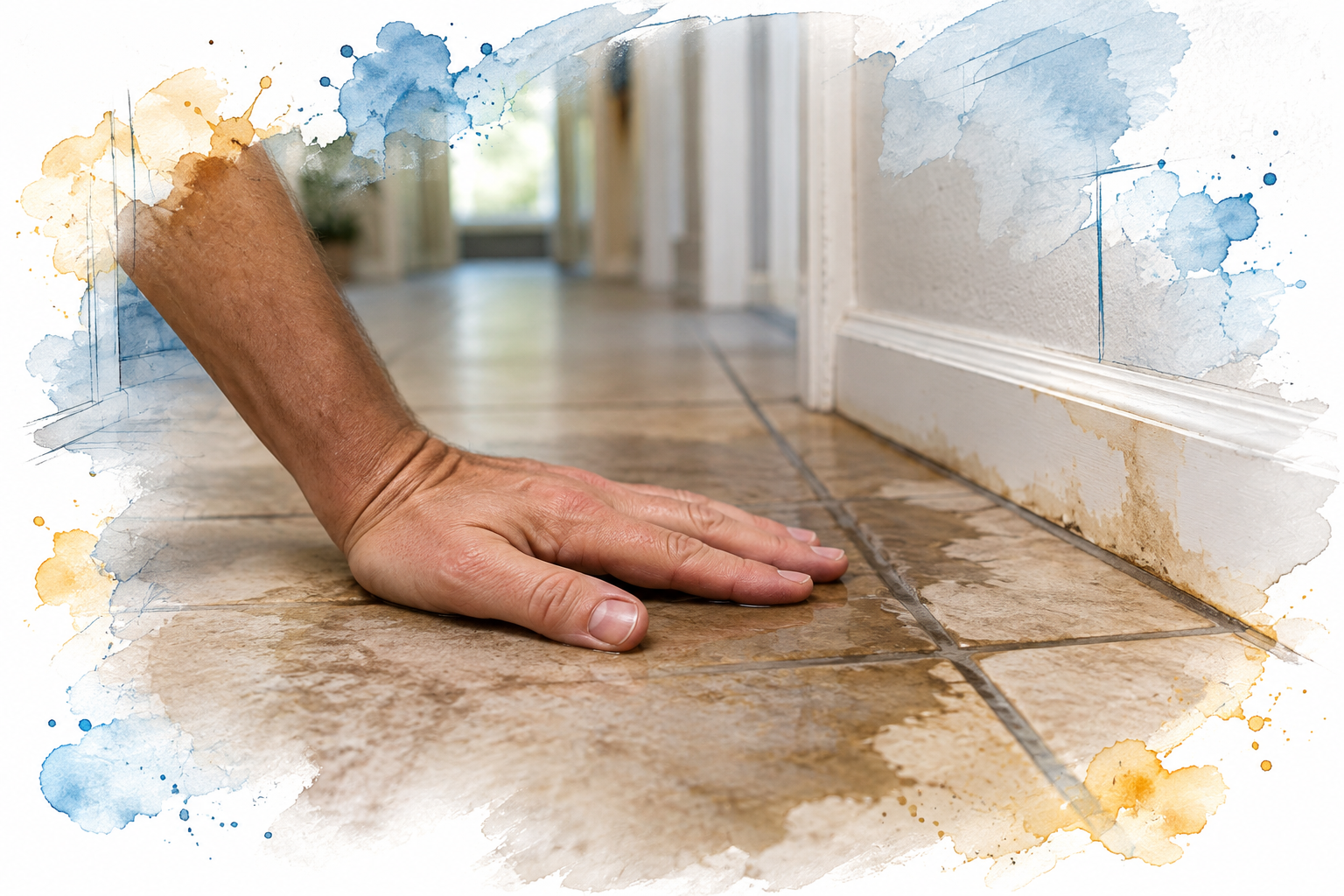
The call almost always starts the same way. The water bill jumped for no reason, there is a sound of running water at night with every faucet off, or one patch of hallway floor feels warm under bare feet.
In older Santa Cruz County neighborhoods, from the Westside to Live Oak to parts of Watsonville, that usually traces back to one thing: original galvanized steel supply lines running through or under a concrete slab. We see the same story in older Monterey County homes too.
Here is my honest position after a lot of these jobs. If your house still runs on galvanized pipe and you have already had more than one leak, the question is not whether you repipe. It is whether you do it on a weekday you chose, or on a Sunday night with the water shut off to the whole house.
The slab leak signs homeowners write off for months
A slab leak rarely announces itself with a puddle. The water goes down and sideways through gravel and soil long before it ever shows up on your floor.
These are the signals worth acting on:
- An unexplained jump in the water bill with no change in how you use water
- Running water sound when every fixture in the house is off
- Warm or hot spots on the floor, which usually means the hot side is leaking
- Damp carpet, cupping wood, or loose tile in one area
- A musty smell in a closet or along a baseboard with no visible source
- A drop in water pressure at fixtures that used to be fine
The EPA estimates that about 10 percent of homes have leaks wasting 90 gallons a day or more. A slab leak sits at the high end of that range because nothing stops it.
If your water agency has already flagged high usage, that is a real starting point. It also helps to understand what it means when the leak is on your side of the meter, because that line is your responsibility, not theirs.
Locate the leak before anyone breaks concrete
This is the part I feel strongest about. Nobody should be cutting your slab to go looking for a leak.
We locate the leak first, before any access work begins, whether it is in a wall, under a floor, or under concrete. That means isolating sections of the system, listening for the leak, and reading moisture before a single tool touches the floor.
The difference in your home is big:
- A located leak usually means one small, planned opening in the right spot
- Guesswork means multiple openings, more patching, and a bigger mess
- Locating first also tells us whether you have one bad spot or a failing system
I have walked into homes where someone opened the floor in the wrong room. The repair itself was simple. The demolition was not.
If you want the detailed version of how this works, we covered how a slab leak gets found without tearing up your floor in a separate article.
Targeted repair or full repipe: how I actually decide
Plenty of slab leaks get fixed with a targeted repair, and that is the right call more often than people expect. A single failure in otherwise sound copper does not mean your whole house needs new pipe.
What changes my recommendation is pattern and material.
Galvanized steel is the big one here. Santa Cruz County has hard water throughout, and decades of mineral scale plus internal rust narrows those pipes from the inside. By the time one section fails, the rest of the system is the same age and the same condition.
One homeowner reached out to us after a galvanized line burst under their slab with the water already shut off to the house. At that point the conversation is not really about patching.
Things that push toward a repipe:
- Galvanized supply lines anywhere in the system
- A second or third leak in the same house within a few years
- Rusty or discolored water and weak flow at multiple fixtures
- A leak location that would require major demolition to reach
All repair and repipe work gets completed to California plumbing code, and we pull what the job requires. If another plumber already patched something and it is leaking again, a second look at a failed repair is worth doing before you spend again on the same spot.
Spot repair or repipe: what tips the decision
No chart replaces an on-site assessment, but these are the factors I weigh on every slab leak call in Santa Cruz and Monterey County.
| Factor | Leans toward targeted repair | Leans toward repipe |
|---|---|---|
| Pipe material | Copper in good condition | Galvanized steel, or copper with pinholes |
| Leak history | First leak in the home | Second or third leak in a few years |
| Water quality effects | Clear water, normal flow | Discolored water, weak pressure at several fixtures |
| Access to the leak | Reachable with one small opening | Deep under finished living space |
| Home age | Newer system or prior partial repipe | Original lines from the 1950s to 1970s |
| Your plans | Selling soon, short hold | Staying long term, remodeling rooms |
What planning a 2027 repipe looks like
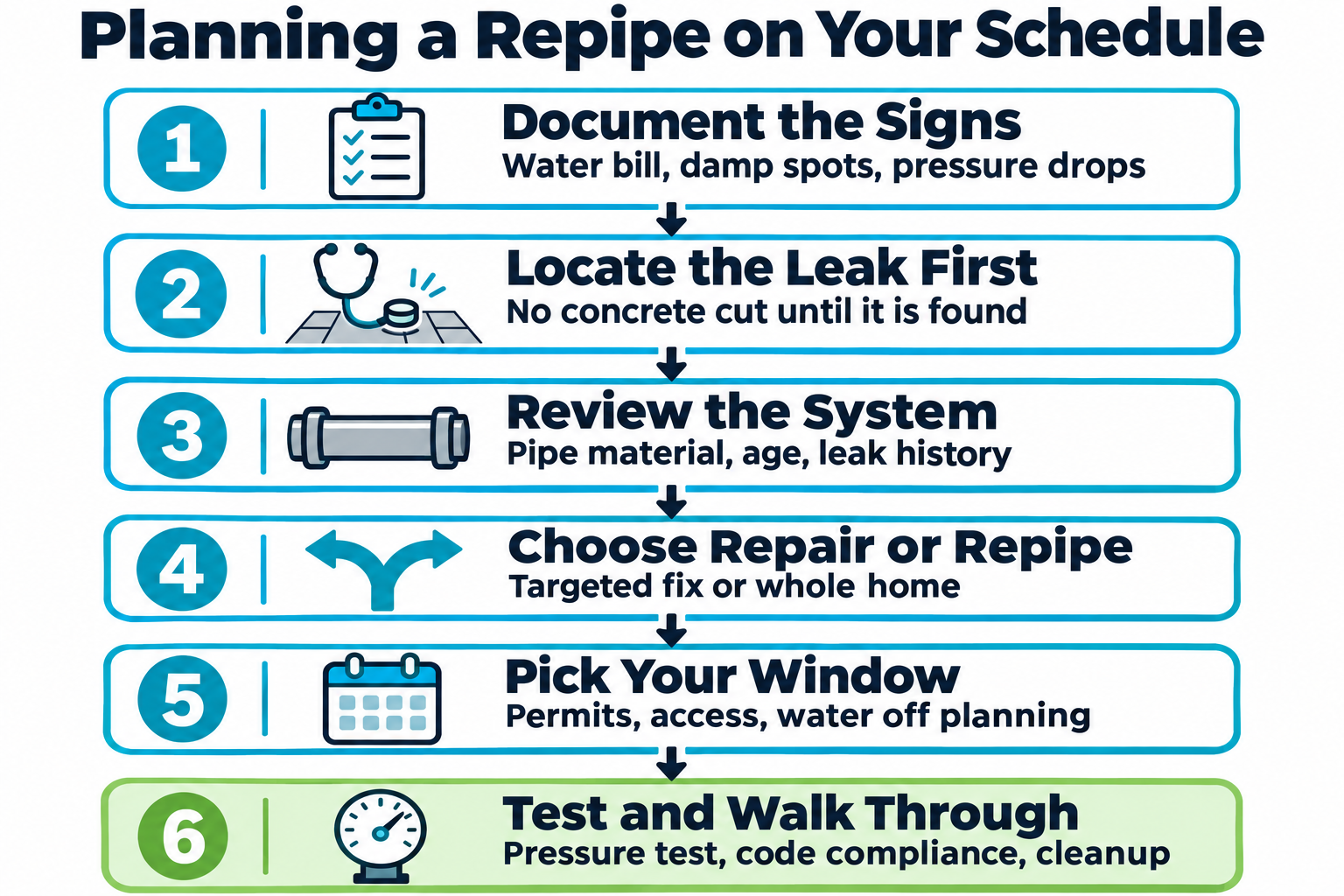
This is the order I walk homeowners through when they want the work done on their terms instead of during an emergency.
Why a planned repipe beats an emergency one
An emergency repipe and a planned repipe are the same work done under very different conditions.
When a line bursts under the slab, your water is off, the clock is running, and you take whatever schedule is available. When you plan it, you get to control the parts that matter to you:
- When the water goes off, and for how long each day
- Which rooms get opened and in what order
- Coordinating around a remodel, new flooring, or a tenant
- Staging the job so you can keep using the house between work days
That last one matters more than people expect. One homeowner called us after hours about a shut-off valve problem, and the job turned complicated. We got them set up so they could keep using their home, then came back to finish on their timing.
There is a scheduling reality on the Central Coast too. Fall and the start of the rainy season bring a wave of drainage and pump work across Santa Cruz County, and calendars across the trade tighten up. Homeowners who start the conversation in late winter or spring have far more choice about when the work happens.
If your insurance carrier has been asking questions after a leak claim, it is also worth reading about automatic water shutoff valves and what installing one involves.
One safety note that is not optional
Leak work and gas work are different animals. Water damage is expensive. A gas leak is dangerous.
If you smell gas anywhere in or around your home:
- Leave the building immediately
- Do not flip light switches, unplug anything, or light a flame
- Call from outside the property, not from inside
Gas leak response is available 24 hours a day, seven days a week, and so is emergency response for burst pipes and sewer backups. We wrote more on the right first move when you smell gas at home.
Frequently Asked Questions About Slab Leaks and Repiping
Another plumber told me I would need a repipe eventually. How do I know when eventually is?
We hear this one a lot. For most homes, the trigger is the second leak, not the first. One failure in copper can be a fluke. Two failures in galvanized pipe within a few years means the rest of the system is on the same timeline, and spot repairs start costing you more in disruption than they save.
Will you have to tear up my floor to find the leak?
No. We locate the leak before any access work begins. Once we know where it is, the opening is as small as the repair allows. Cutting concrete to go searching is backwards, and it is how people end up with three holes in a floor and one leak.
How long does a whole-home repipe take?
It depends on the square footage, how many fixture drops are involved, and how accessible the lines are. A single story home with three bathrooms is a very different job than a two story with finished walls everywhere. We walk the property first and give you a realistic window before anything starts.
Does homeowners insurance cover a slab leak?
Policies vary, so check with your carrier. In general, many policies address the resulting water damage more readily than the pipe repair itself, and access work is often treated separately. Documentation of the leak location and the repair helps either way.
What does a slab leak repair or repipe cost?
Too many variables to answer honestly in an article, and I would rather not guess at your house from a keyboard. Pipe material, leak location, access, and the number of fixtures all move the number. Call (831) 515-9903 and we will look at the actual property.
Can I just keep using the house with a known slab leak?
Not for long. A slab leak runs continuously, saturates the soil under your foundation, and can undermine flooring and framing. It also keeps showing up on your water bill every single month until it is fixed.
Thinking about a repipe before the next leak?
If you are seeing the early signs, or another plumber already told you a repipe is coming, the useful next step is getting the leak located and the system looked at while you still have time to plan. We are a licensed and insured plumbing contractor, CSLB #1102966, working throughout Santa Cruz County and Monterey County, with emergency response available 24/7. You can reach us at (831) 515-9903 or through maverickplumbingtechnicians.com.
