Direct Answer: In Santa Cruz County, the sewer lateral from your house to the public main is your responsibility to maintain and repair — and the City of Santa Cruz requires a licensed inspection before you can sell.
Most homeowners in Santa Cruz County have no idea their sewer lateral — the underground pipe that carries waste from the house to the public sewer main — is entirely their responsibility to maintain and repair. That includes the section running under the sidewalk, across the city easement, and all the way to the main in the street. The city does not own it, maintain it, or fix it when it fails.
If you are selling a home within the City of Santa Cruz, that fact has real legal weight. A 2018 ordinance requires sellers to have the lateral inspected by a licensed plumber and submit documentation proving compliance before escrow closes. I have seen sellers learn about this requirement during escrow — and suddenly face an inspection deadline, potential repairs, and a transaction that can’t close until everything is resolved.
Whether you are listing in Santa Cruz or managing a rental property in Watsonville, understanding how this ordinance works — and what a sewer camera inspection actually involves — can save you significant disruption at the worst possible moment.
What ‘Your Responsibility’ Actually Means
When I tell homeowners that their sewer lateral is their responsibility, the first reaction is usually surprise. Most people assume the city’s obligation starts somewhere near the property line. It doesn’t.
In Santa Cruz County, the entire lateral belongs to the property owner — from the house connection all the way to where it ties into the public main. That can mean 50 feet of pipe, sometimes more, running under your yard, your driveway, the sidewalk, and into the street right-of-way. If any section of that pipe cracks, separates, gets crushed, or fills with roots, you are the one responsible for fixing it.
This matters most in two situations:
- When you’re selling — the City of Santa Cruz’s point-of-sale ordinance means an inspection is not optional.
- When there’s a sewer spill — a backup that reaches the street triggers a compliance timeline and potential fines, regardless of where the failure occurred along the lateral.
Older neighborhoods in Santa Cruz and Watsonville have laterals that were installed decades ago — clay tile, cast iron, or Orangeburg pipe — all of which degrade over time. Tree roots are relentless in this part of the Central Coast. I have pulled camera footage showing nearly full blockages in laterals where the homeowner had no idea anything was wrong. The pipe doesn’t announce itself until it fails.
The City of Santa Cruz Ordinance — What Sellers Need to Know
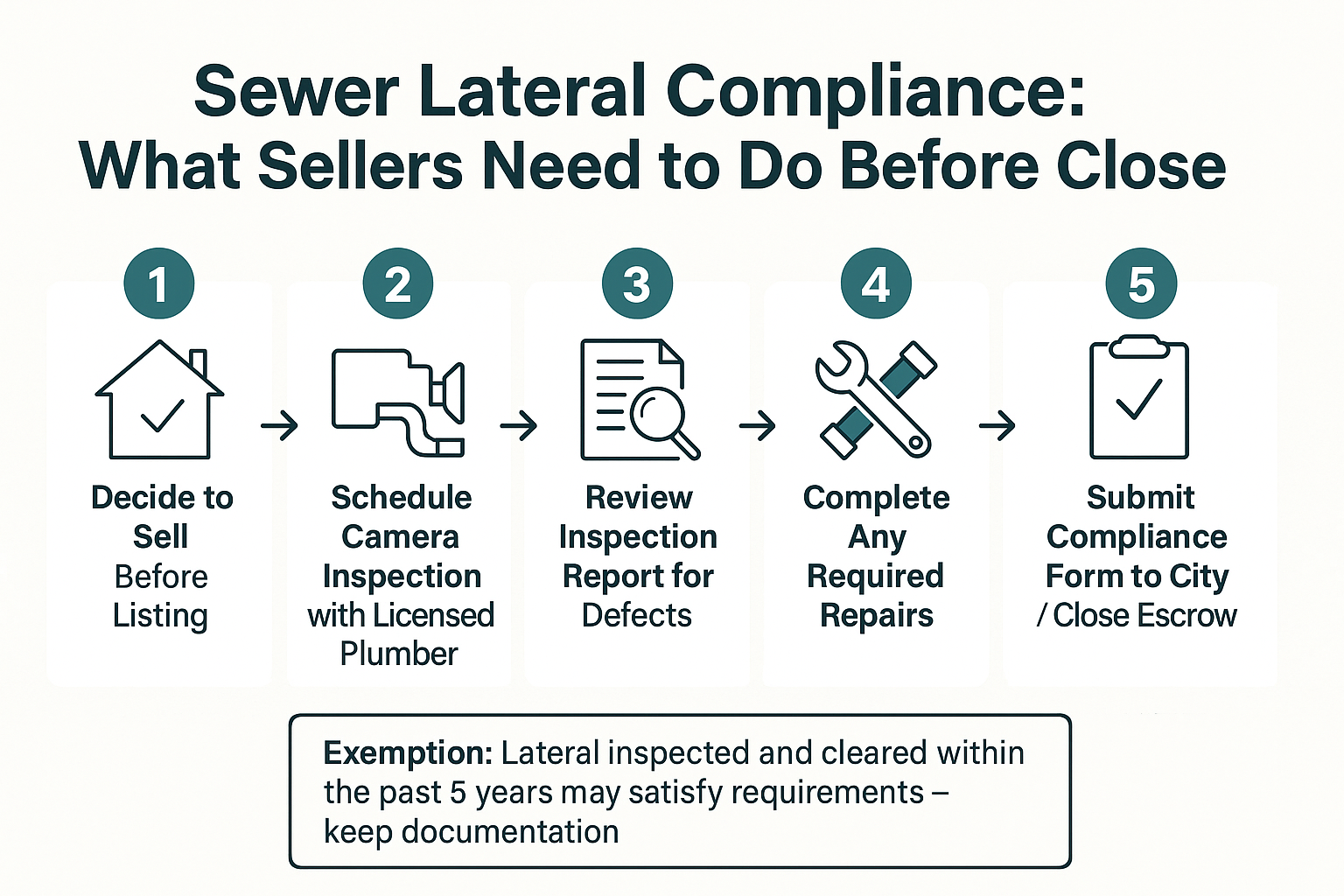
The City of Santa Cruz sewer lateral ordinance, which took effect in 2018, places a clear obligation on property owners selling within city limits. Before a transaction can close, the seller must:
- Have the lateral inspected by a licensed plumber using a video camera
- Repair any defects identified in the inspection
- Submit the completed inspection form to the city verifying compliance
There is one exemption worth knowing: if the lateral was inspected and cleared within the past five years, that documentation may satisfy the requirement. If you have records from a recent inspection, pull them before you list — they could eliminate a step from your pre-sale checklist.
Watsonville currently has no equivalent point-of-sale requirement. But the broader county-level rules for unincorporated Santa Cruz County properties connected to public sewer systems still place lateral maintenance obligations on property owners. The specific rules vary by location in ways that catch sellers off guard, which is why understanding the framework matters no matter where your property sits.
For more detail on how the City of Santa Cruz’s Public Works department describes the lateral program and property owner obligations, their official guidance is the right place to start.
The Point-of-Sale Sewer Lateral Compliance Sequence
This shows the logical sequence from listing to close — and where a lateral inspection fits in the process to avoid last-minute problems.
What a Sewer Camera Inspection Actually Looks Like
A lot of homeowners have heard the term “sewer camera inspection” without knowing what actually happens. Here is what I walk customers through before we start.
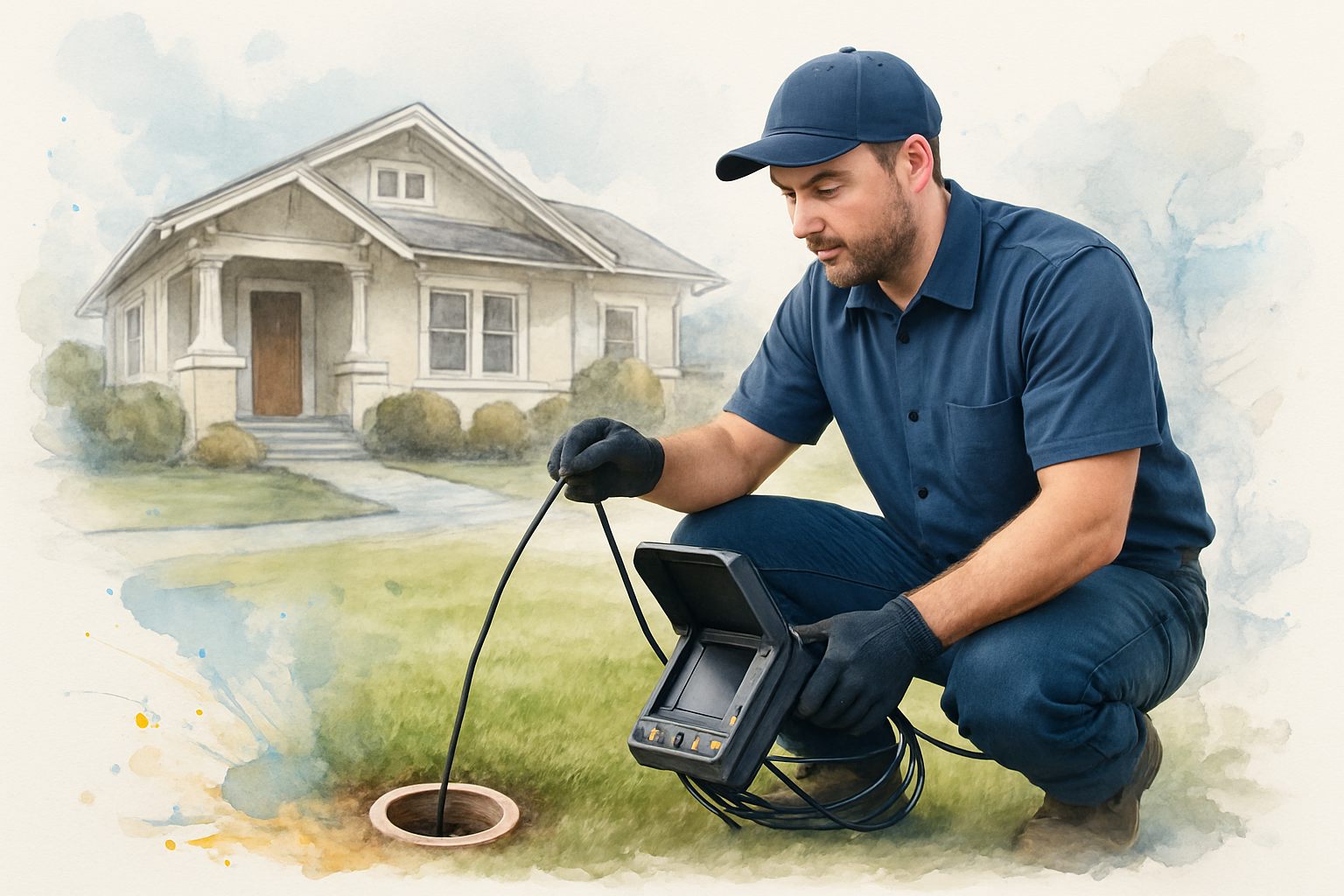
We access the lateral through a cleanout — a capped port, usually located in the yard near the house foundation or along the pipe’s path to the street. If a proper cleanout doesn’t exist or isn’t accessible, that’s something we address before running the camera.
From there, a flexible camera cable is fed down the pipe while we watch a live feed on a monitor. We can see everything: root intrusion, cracks, offset joints where sections have shifted, grease buildup, standing water that indicates a belly in the line, and partial or full blockages. The entire lateral gets documented — not just the first few feet.
At the end, you get a clear picture of what’s in that pipe. For a seller, that documentation is what gets submitted to the city. For any property owner, it’s simply useful information — you know what condition your pipe is in, what it might need in the next few years, and whether there’s something that needs immediate attention.
If you want to understand more about what the camera footage actually reveals and what different defects look like, what a sewer camera actually shows breaks that down in detail. And if you’ve had a backup before, one slow drain vs. every drain backing up can help you understand what that history might mean for your lateral.
Why the Timeline Matters More Than Most Sellers Expect
Here is the scenario I see cause real problems: a seller gets into escrow, the buyer’s agent raises the lateral ordinance, and suddenly the seller is scrambling to schedule an inspection with three weeks left before close.
If the inspection comes back clean, no problem — file the form and move on. But if the camera shows root intrusion, a cracked section, or pipe separation, those repairs have to be completed and documented before escrow closes. In a market where deals can move quickly and buyers have limited patience for extended timelines, this is a genuine risk.
The straightforward answer is to get ahead of it. Schedule the camera inspection before you list. If the lateral has a problem, you find out on your own timeline — not under escrow pressure. You can get repairs done, collect the documentation, and list the property with compliance already handled. That is a much better position than discovering a failed pipe with a closing date on the calendar.
For sellers in Watsonville whose properties aren’t subject to the Santa Cruz ordinance, a pre-listing camera inspection still makes sense. A sewer backup after you’ve accepted an offer — or during a buyer’s inspection period — creates problems no seller wants to manage. Understanding when a clogged drain is actually a broken one is exactly the kind of knowledge that can prevent that situation.
Sewer Lateral Obligations by Property Location in Santa Cruz County
The rules differ depending on where your property sits. This gives a quick reference for the most common scenarios sellers and property owners encounter.
| Location | Point-of-Sale Inspection Required? | Property Owner Responsible for Lateral? |
|---|---|---|
| City of Santa Cruz (city limits) | Yes — since 2018 ordinance | Yes — full lateral to public main |
| Watsonville (city limits) | No current requirement | Yes — full lateral to public main |
| Unincorporated Santa Cruz County | Varies — county-level rules apply | Yes — full lateral to public main |
| Parts of Monterey County served by public sewer | Check with local utility or municipality | Yes — full lateral to public main |
Property Managers and Rental Owners Carry the Same Obligations
If you manage rental units or a multi-unit residential property in Santa Cruz, the lateral ordinance applies to you exactly the same way it applies to an individual homeowner selling a single-family property.
A sewer spill at a rental property triggers the same compliance timeline and the same fine exposure. The fact that it’s a tenant-occupied building does not shift the liability. And because sewer failures at multi-unit properties can affect multiple units simultaneously, the disruption tends to be larger and more urgent.
The proactive approach here is the same as for sellers: a lateral that has been camera-inspected and cleared within the past five years is not just compliant under current rules — it gives you real, documented information about the pipe’s condition. That data is useful for planning maintenance budgets, negotiating with buyers or lenders, and avoiding the kind of emergency that pulls you out of whatever you’re doing on a Saturday morning.
If a lateral inspection reveals root intrusion or buildup that isn’t yet a structural failure, hydro jetting can clear the line and extend its serviceable life. Understanding why the same drain keeps backing up can also help property managers recognize when recurring problems are a symptom of a deeper lateral issue rather than isolated clogs.
Frequently Asked Questions About Sewer Lateral Inspections and Compliance
Does the City of Santa Cruz ordinance apply to commercial properties too?
The ordinance covers properties connected to the city’s public sewer system, which can include commercial buildings. If you own or manage a commercial property within city limits and are planning a sale, confirm the applicability directly with the City of Santa Cruz Public Works department — the rules around commercial lateral compliance can involve additional considerations depending on the property type.
What happens if my lateral fails the inspection?
You’ll need to complete the required repairs before the city will sign off on compliance. The specific repair depends on what the camera found — it might be root clearing and pipe lining, a spot repair on a cracked section, or in worse cases, a full lateral replacement. A licensed plumber will walk you through what the footage shows and what’s actually needed. The key is not to let this be a surprise during escrow.
My property is in Watsonville — do I need a sewer camera inspection to sell?
Watsonville currently has no point-of-sale lateral inspection requirement. But that doesn’t mean skipping the inspection is the right call. A camera inspection before listing tells you whether there’s a problem that could surface during a buyer’s due diligence period — and lets you handle it on your own schedule.
How long does a sewer camera inspection take?
Most residential lateral inspections take one to two hours, depending on the length of the lateral, accessibility of the cleanout, and what the camera finds. If the pipe is significantly blocked, clearing it first may add time. The documentation and report preparation happen after the on-site work is complete.
Can I use a camera inspection from two years ago to satisfy the ordinance?
Possibly. The City of Santa Cruz exemption covers laterals inspected and cleared within the past five years, provided documentation is on file. Whether a prior inspection qualifies depends on what it documented and whether the city accepts the format of that report. Check with the city directly — and have your paperwork ready.
What causes sewer laterals to fail in Santa Cruz County?
The most common causes I see on camera are root intrusion from trees and large shrubs, pipe separation at joints where sections have shifted over time, and simple age-related deterioration of older materials like clay tile or Orangeburg pipe. Hard water throughout Santa Cruz County contributes to mineral buildup inside pipes, which compounds blockage problems over time. Homes built before the 1980s are most likely to have laterals that show significant wear.
Need a Sewer Camera Inspection Before You List — or Before a Problem Finds You?
We perform sewer camera inspections for homeowners and property managers throughout Watsonville, Santa Cruz, and the broader Santa Cruz County area — including compliance documentation for the City of Santa Cruz point-of-sale ordinance. Maverick Plumbing Technicians, Inc. is a licensed and insured plumbing contractor (CSLB #1102966) with the equipment and experience to document your lateral accurately and clearly. Call us at (831) 515-9903 to schedule an inspection, or reach out through maverickplumbingtechnicians.com to tell us about your property and timeline.
