
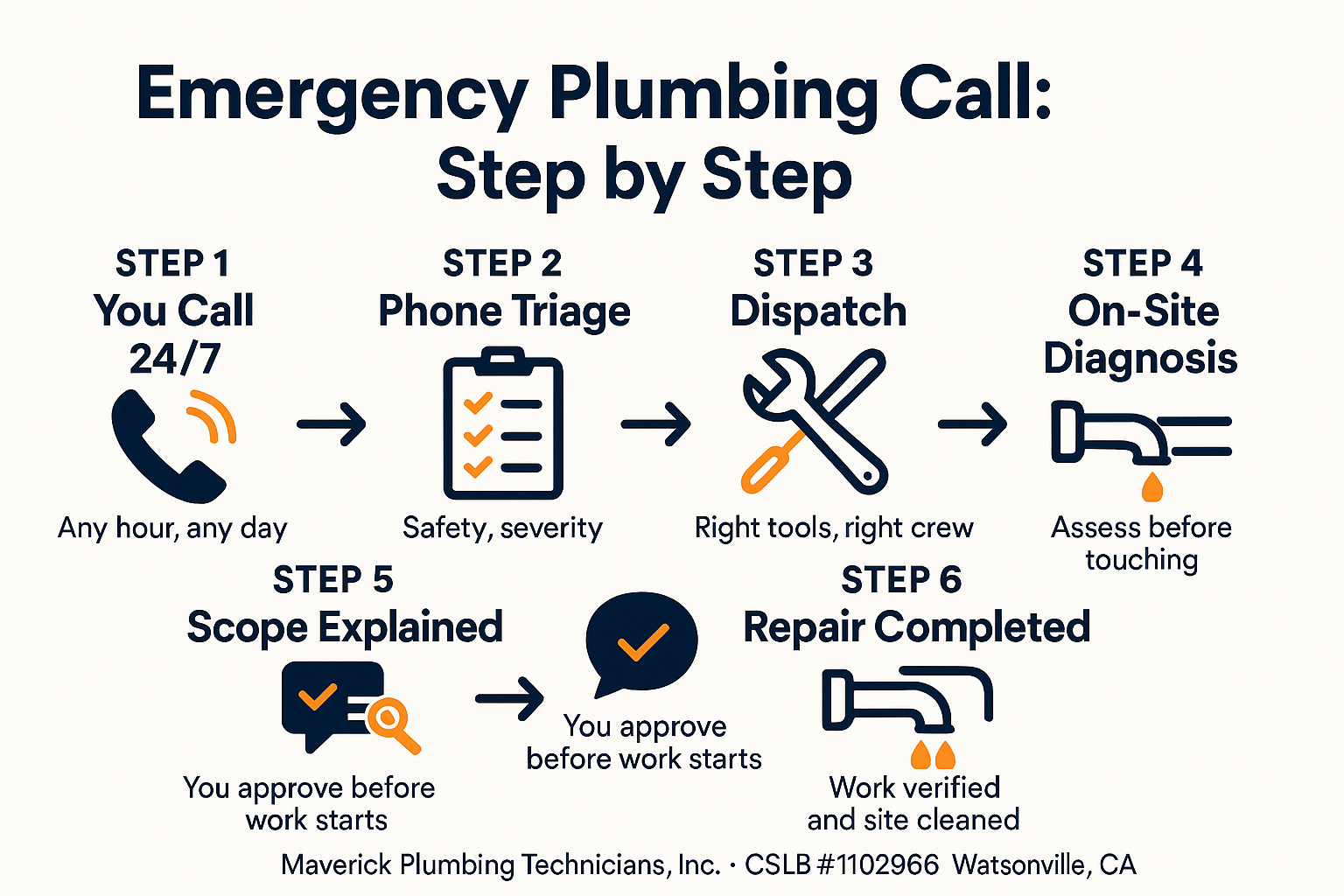
Direct Answer: When you call a 24 hour plumber in Watsonville, the first minutes involve phone triage to assess safety, then a technician is dispatched with the right tools, diagnosis happens before any repair work starts.
Most homeowners who call a plumber during an emergency have never done it before. Water is on the floor, or there’s a smell they can’t identify, or the toilet backed up into the hallway, and now they’re dialing a number with no idea what comes next.
I’ve taken a lot of those calls serving homeowners across Watsonville and Santa Cruz County. And the thing I hear most often after a job is done is, “I didn’t know it would go like that.” Usually that’s a good thing. But the uncertainty in the first few minutes of an emergency can send people looking elsewhere, even when help is available.
This is a walkthrough of exactly what happens from the moment you call a 24 hour plumber in Watsonville, what we ask, what we do, and what you should be doing in the meantime.
The First Call Is a Safety Check, Not a Booking Form
When you call during an active plumbing emergency, the first few minutes aren’t about scheduling. They’re about figuring out whether you’re safe and whether the situation is getting worse.
A licensed contractor will ask specific questions fast:
- Is water actively flowing or has it slowed?
- Do you smell gas anywhere in the home?
- Can you locate your main shut-off valve?
- Is the water near any electrical panels or outlets?
- What does the water look like, is it sewage, clean water, or something else?
Those answers determine dispatch priority and what the technician brings on the truck. A caller with a burst supply line and water near their electrical panel is a different situation than a caller with a slow drain. Both deserve service, but they get routed differently.
If you smell gas, that changes everything. Leave the building immediately. Don’t flip any light switches, don’t open the refrigerator, don’t light anything. Call from outside. Gas leak response is available 24 hours a day, seven days a week, and the U.S. Consumer Product Safety Commission is clear that even a small spark can ignite accumulated gas. Get out first, then call.
For every other emergency, burst pipe, sewer backup, failed water heater, the call ends with two things: a clear next step for you, and a technician on the way.
What You Should Be Doing While You Wait
A lot of homeowners ask what they can do before the technician arrives. The answer is usually one thing: shut off the water at the main.
If you don’t know where your main shut-off is, now is a good time to find out, before the next emergency happens. In most Watsonville homes it’s near the front of the property, often in a ground-level box near the sidewalk or at the side of the house. If you’re not sure, I’ll walk you through it on the phone.
A few other things that help:
- Move any valuables, electronics, or furniture away from standing water
- Don’t use any drains or toilets if you suspect a sewer backup
- Take a photo or short video of what you’re seeing, it helps us understand the scope before we arrive
- Leave interior doors open so we can move through the space quickly
What you should not do is reach for a store-bought drain cleaner, try to reseat a leaking wax ring yourself, or cut into a wall to trace a pipe. Before you call an emergency plumber, run through this checklist for a more complete look at the steps that keep small problems from becoming bigger ones.
How an Emergency Plumbing Call Actually Flows
From the moment you call to the moment the repair is done, here’s how the process moves at each stage.
What Happens When the Technician Arrives
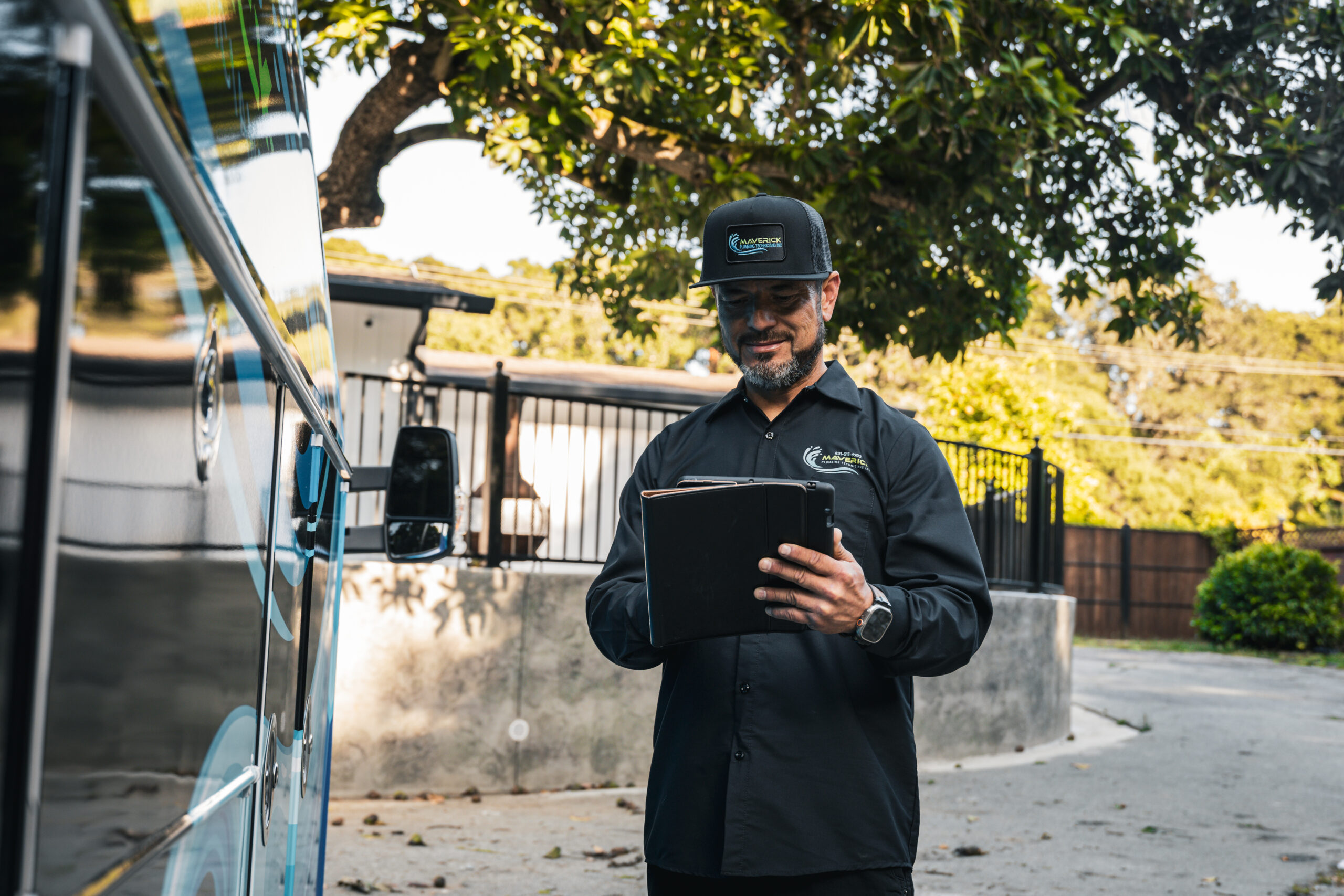
One thing that surprises homeowners: a licensed plumber will not always start cutting or repairing the moment they walk in. The first step is always diagnosis.
That means looking at the full picture before touching anything, tracing where the water is coming from, checking whether the problem is isolated or part of something deeper, and assessing what the correct repair actually requires. A contractor who skips this step and starts opening walls without a clear diagnosis can turn a contained leak into a significantly larger job.
Before any work begins, you’ll get a clear explanation of what we found and what we recommend. That protects you. It also means you’re never surprised by the scope.
Some emergency calls turn out to be straightforward, a failed valve, a cracked supply line, a toilet seal that let go. Others reveal something that requires more involved work, like a slab leak that’s been building undetected or a sewer backup that points to a deeper line problem. Either way, you know the scope before the work starts.
Erik Elfring, a customer in our area, put it well in his review: “Jorge and Moises showed up exactly when they said they would, and even gave a courtesy call a half hour before they showed up!” That call-ahead is standard practice for us, not because it’s a nice touch, but because you’ve got enough to manage already.
Emergency vs. Non-Emergency: How Calls Get Prioritized
Not every call is the same urgency level. Here’s how common plumbing situations typically get categorized when we triage on the phone.
| Situation | Priority Level | Immediate Action Needed |
|---|---|---|
| Gas odor inside the home | Critical, Dispatch now | Leave immediately, call from outside |
| Burst pipe with active water flow | Emergency, Same hour | Shut off main water supply |
| Sewer backup flooding a floor | Emergency, Same hour | Stop using all drains and toilets |
| Water heater failure, no hot water | Urgent, Same day | Note any error codes displayed |
| Single slow drain, no overflow | Standard, Scheduled | Avoid using that drain until assessed |
| Running toilet or dripping faucet | Standard, Scheduled | Can wait for next available appointment |
What ‘Available 24/7’ Actually Means in Practice
About a quarter of the genuine emergency calls we receive come from homeowners in active failure situations, water on the floor, no heat, something that can’t wait until Monday. What those callers need to hear isn’t just that someone is available. They need a clear next step and a real arrival window.
Uncertainty is what sends callers looking elsewhere. If you call and get told “someone will come eventually,” that’s not enough when water is spreading across your kitchen floor in Watsonville.
For situations that feel like they can’t wait until morning, the answer from our end is direct: we tell you whether we can come tonight, when to expect us, and what to do right now in the meantime. If you’re genuinely not sure whether your situation counts as an emergency, this guide on when a plumbing problem becomes an emergency can help you make that call before you pick up the phone.
After-hours service is available, including weekends and holidays. The nature of emergency plumbing is that it doesn’t schedule itself around business hours, and neither do we.
Frequently Asked Questions About Emergency Plumbing in Watsonville
Can you come out today, or even within the hour?
For genuine emergencies, active burst pipes, sewer backups flooding a floor, gas odors, yes, we respond the same day and as fast as we safely can get there. I’ll give you an honest arrival window on the phone, not a vague estimate. If we’re already committed on another call, I’ll tell you that directly and give you a real time.
What should I do if I smell gas in my home?
Leave the building immediately. Do not flip any light switches, do not light a flame, do not open the refrigerator. Get outside, then call us from there. Gas leak response is available 24 hours a day, 7 days a week. Do not go back inside until the line is shut off and a licensed contractor has cleared the area.
Will the plumber start repairs right away, or is there a waiting period?
Diagnosis comes first, always. We assess the full situation before touching anything, then explain what we found and what the repair involves before work begins. This protects you from surprises and protects the job from getting worse because someone moved too fast.
How do I know if my situation is a real emergency or something that can wait?
A few clear markers: active water flow you can’t stop, sewage backing up into the home, a gas smell, or water near electrical panels. Those are emergencies. A single slow drain, a running toilet, or a dripping faucet can typically wait for a scheduled appointment. If you’re not sure, call us, we’ll help you figure it out on the phone.
Do you handle commercial plumbing emergencies, not just residential?
Yes. We serve businesses, property managers, and commercial facilities throughout Santa Cruz County and parts of Monterey County. Commercial plumbing failures affect operations, tenants, and health code compliance, so we treat them with the same urgency as residential emergencies.
If You’re in the Middle of It Right Now
If you’re dealing with an active plumbing emergency in Watsonville, Santa Cruz County, or the surrounding areas of Monterey County, we’re reachable any hour at (831) 515-9903. Tell us what’s happening and we’ll walk through the next step with you on the phone, no guessing, no vague timelines. You can also request service at maverickplumbingtechnicians.com if your situation allows a moment to fill out a form.
