Direct Answer: Most repairs, like clearing a clog or swapping a faucet cartridge, need no permit. Replacing a water heater, adding a fixture, repiping, or altering gas or drain piping almost always does.
Almost every week, someone asks me some version of the same question: do I really need a permit for this? Usually they are replacing a water heater, adding a water softener, or fixing something a home inspector flagged during escrow.
The honest answer is that California’s permit rules cover more work than most homeowners expect. Jobs that feel routine, like swapping a water heating unit for a newer model, sit squarely inside permit territory.
So here is how I explain it to customers in Watsonville, Santa Cruz, and the north Monterey County communities we serve. What the rule actually says, where the line between repair and alteration sits, and why skipping a permit tends to surface years later at the worst possible time.
When Is a Plumbing Permit Required for a California Homeowner Repair?
Santa Cruz County’s building department puts it plainly. A permit is required when any plumbing, gas, or drainage piping work, or any fixture or water heating or treatment equipment, is installed, altered, repaired, or replaced, unless it is specifically exempted by the California Plumbing Code or local ordinance.
Read that again and you’ll see how wide it is. The county’s own guidance on when a plumbing permit is required starts from the assumption that the work needs one, then carves out exemptions.
Which office you deal with depends on where the house sits:
- City of Watsonville properties go through the city’s building division
- City of Santa Cruz properties go through the city, which has its own adopted amendments
- Unincorporated Santa Cruz County properties, from Corralitos to Aptos to Bonny Doon, go through the county
- North Monterey County properties, including areas near Castroville and Marina, follow that jurisdiction’s process
The practical takeaway is not that you need to memorize any of this. It’s that the default answer leans toward yes, and the burden is on you to know which exemption applies.
The Repair vs. Alteration Line, in Plain Terms
This is where most confusion lives. A repair puts an existing system back the way it was. An alteration changes the system: new equipment, new piping, a fixture in a new spot, or a different connection to the water, gas, or drain lines.
Clearing a clog is a repair. Nobody pulls a permit to snake a kitchen line, and the slow-draining sink that a Santa Cruz homeowner wrote us about last month was a straight service call.
Swapping the cartridge in a dripping shower valve is a repair. Rebuilding a toilet that won’t flush right is a repair. Replacing a wax ring is a repair.
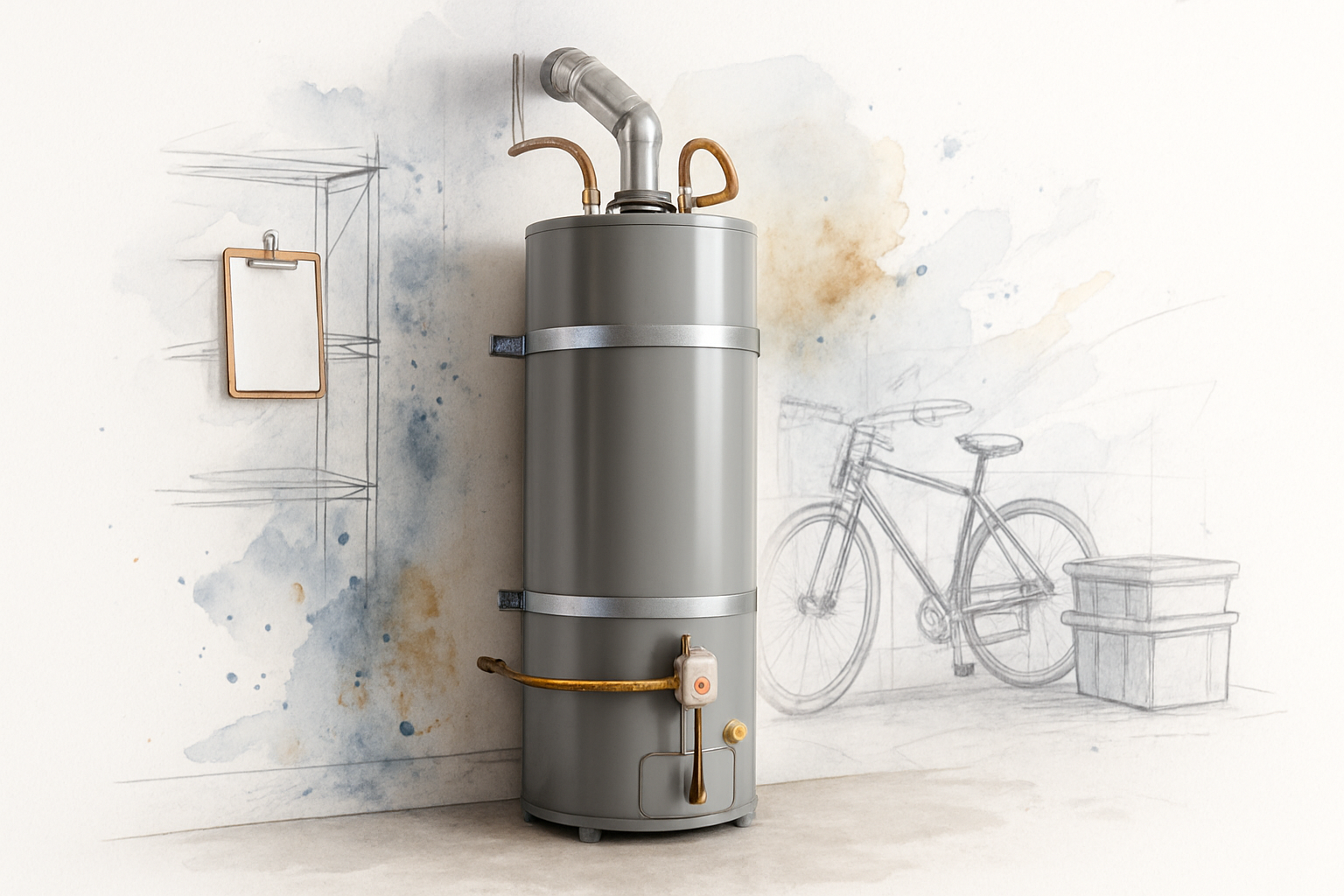
But once you take out the water heater and put in a new one, you are replacing water heating equipment, and that is on the permit side of the line. Same with a whole-home water softener, because it ties into your main supply. Same with a repipe, even a partial one, and same with moving or adding a fixture during a bathroom remodel.
One more thing worth knowing: the difference between a repair and a replacement is a judgment call on the equipment itself, and it changes the permit answer along with it.
Common Jobs and Whether a Permit Is Typically Involved
This is a general guide based on how these jobs usually get handled locally. Your building department has the final say on any specific project.
| Job | Permit Typically Needed? | Why |
|---|---|---|
| Clearing a clogged drain or hydro jetting a line | No | Maintenance and repair, no piping altered |
| Faucet cartridge or toilet flapper replacement | No | Repair of an existing fixture |
| Like-for-like faucet swap in the same location | Usually no | No change to supply or drain piping |
| Water heater replacement, tank or tankless | Yes | Water heating equipment being replaced |
| Tankless conversion from a tank unit | Yes | Gas sizing, venting, and piping all change |
| Whole-home water softener installation | Yes | Water treatment equipment tied to the main supply |
| Partial or whole-home repiping | Yes | Water piping is being altered |
| Adding or relocating a fixture | Yes | New supply and drain connections |
| Sewer line repair or replacement | Yes | Drainage piping altered or replaced |
| Any gas piping change | Yes | Gas work is inspected without exception |
| Backflow preventer installation or replacement | Yes | Cross-connection control point on the potable supply |
The Code Changed on January 1, 2026
California adopted an updated Plumbing Code effective January 1, 2026, based on the 2025 code cycle. Both the City of Santa Cruz and Santa Cruz County layer their own local amendments on top of that state baseline.
Two things follow from that. First, work done to a generic national standard can still fail a California inspection, because the state amends the model code. Second, an install that passed under an older cycle may not match what an inspector is looking for today.
I’m not saying homeowners should become code experts. I’m saying the code moves, and keeping up with it is part of what a licensed contractor does for a living. Water heater rules in particular have been shifting fast, which I covered in more detail in what California’s changing gas water heater rules mean for local homeowners.
What the Permit Process Actually Looks Like
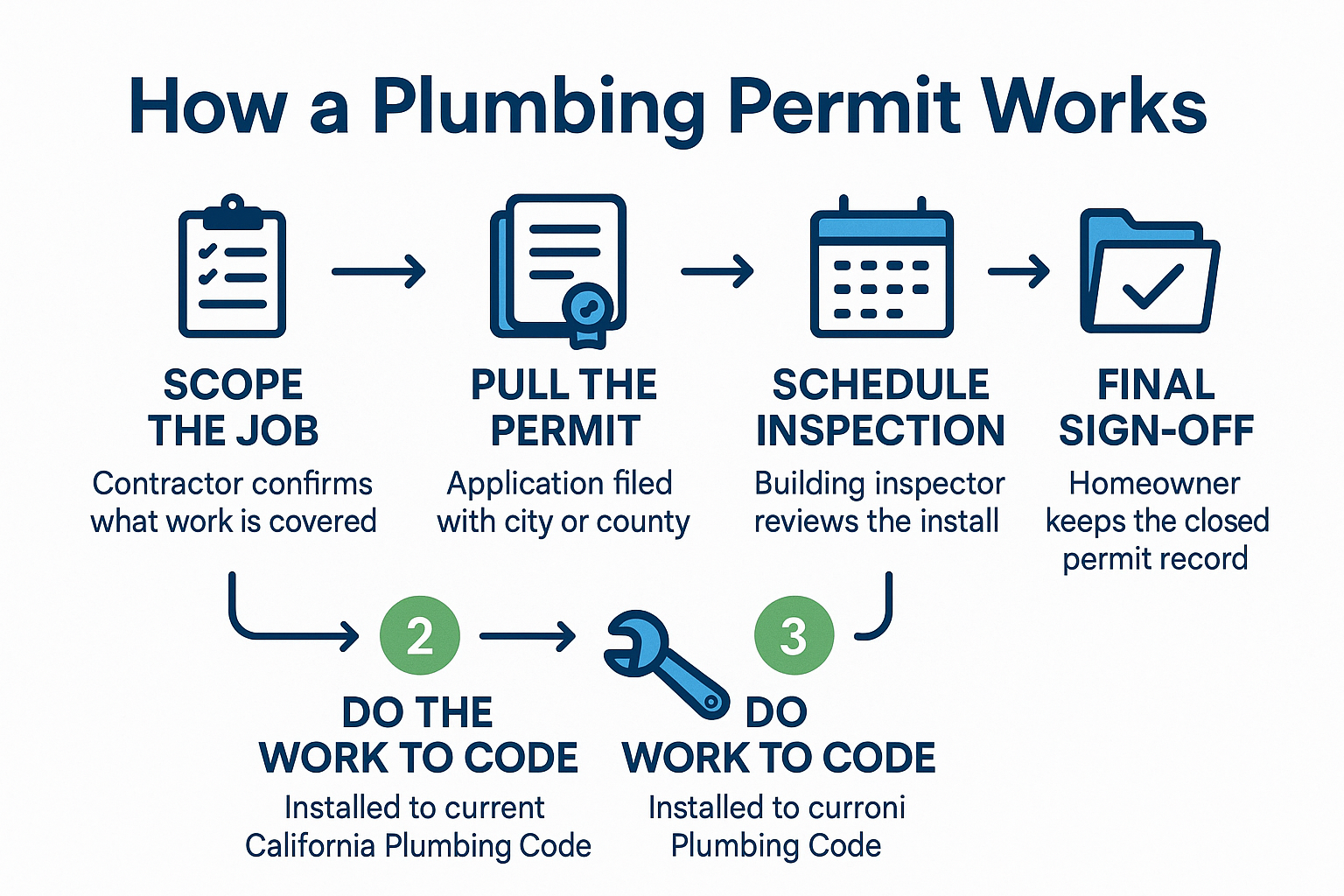
For a homeowner who has never been through it, here is the sequence from start to finish.
Where Unpermitted Work Comes Back to Bite You
Most people who skip a permit are not trying to cheat anyone. They just want the water heater working again and nobody brought it up. The problem shows up later, in two specific moments.
When the house sells. Real estate calls are a steady part of our week right now, and buyers, sellers, and agents all ask the same thing: can you diagnose what the inspection flagged and put it in writing? A buyer’s inspection or a lender’s appraisal can surface work that has no permit record behind it. That turns into a renegotiation, a repair credit, or a retroactive permit request while the clock on escrow keeps running.
When you file an insurance claim. If a water heater fails and floods a hallway, or a supply line lets go inside a wall, the insurer investigates the source. One of the questions that can come up is whether the failed equipment was installed or modified without a permit. I’m not going to tell you how any particular carrier will rule, but I will tell you it is a question you do not want to be answering with a shrug.
A closed permit is a small piece of paper that quietly answers both of those questions for you years down the road.
What a Licensed Contractor Handles for You
When a permit is part of the job, the contractor should be handling it, not handing it to you. Maverick Plumbing works under CSLB license #1102966, and on permitted jobs that means:
- Pulling the permit under the contractor’s license
- Doing the install to current California Plumbing Code and any local amendment
- Scheduling the inspection and being on site for it
- Leaving you with the documentation once it’s signed off
One caution worth repeating: if a contractor asks you to pull the permit as the owner-builder on a job they are performing, ask why. That shifts responsibility for the work onto you.
And if the job involves gas piping, treat it as its own category. Gas work gets inspected every time. If you ever smell gas, leave the building first, don’t touch light switches, and call from outside. I wrote out the full gas leak safety sequence here.
Frequently Asked Questions About Plumbing Permits in Santa Cruz County
Do I need a permit to replace my water heater in Watsonville?
Yes, in almost every case. Replacing water heating equipment falls directly under the rule, and the inspection typically looks at seismic strapping, venting, gas connections, the temperature and pressure relief line, and drain pan routing. This applies to tankless units too.
Does clearing a clogged drain require a permit?
No. Drain cleaning, hydro jetting, and camera inspections are maintenance and diagnostic work. Nothing is being installed or altered, so there is no permit involved.
What about a water softener or a reverse osmosis system?
A whole-home softener ties into your main water supply, which puts it under the water treatment equipment language in the rule, so plan on a permit. A point-of-use reverse osmosis unit under the kitchen sink is a narrower job, but the local building department is still the right place to confirm. Hard water is common across the county, so this comes up often.
I already had work done without a permit. What now?
It is usually fixable. Jurisdictions have a process for permitting existing work after the fact, which typically involves an inspection and sometimes opening up part of the install so it can be seen. It is far less painful to deal with before a buyer’s inspector finds it.
Can I pull the permit myself as the homeowner?
California allows owner-builder permits in certain situations, and the building department can explain the limits. Just understand that pulling it yourself makes you responsible for the work passing inspection, which is a different position than having a licensed contractor carry it.
How long does the inspection add to a job?
It depends on the department’s schedule and the season. In practice it’s the difference between finishing a job and finishing a job that’s on record, and the wait is usually measured in days, not weeks.
Questions About Whether Your Job Needs a Permit?
If you’re planning a water heater replacement, a repipe, or a fixture change in Watsonville, Santa Cruz, or the north Monterey County area and you’re not sure where it lands, we’re happy to talk it through before anything gets scheduled. You can reach us at (831) 515-9903 or through maverickplumbingtechnicians.com. We’re a licensed and insured plumbing contractor with 24/7 emergency service available.
