Direct Answer: No hot water usually points to a pilot light failure, a faulty thermocouple, an error code on a tankless unit, or a water heater that has simply reached the end of its life. The type of unit you have determines where to start.
You turned on the shower and the water never got warm. Or maybe it was lukewarm for a few minutes, then went cold. Either way, it’s a bad start to the morning, and if you’re in Watsonville or anywhere in Santa Cruz County, I want to help you figure out what’s actually happening before you pick up the phone.
The first thing most homeowners do is call a plumber and say “I have no hot water.” That’s a fine starting point, but the more specific you can be, the faster the diagnostic conversation goes. Gas or electric? Tank or tankless? Sudden failure or a gradual fade? Each of those answers points to a completely different problem.
I’ve taken a lot of these calls, and there’s usually a clear path to an answer once you know what to look for. This guide walks through the two most common water heater types, gas tank units and tankless systems, and what’s most likely going wrong with each.
Start Here: Two Questions That Point You in the Right Direction
Before anything else, ask yourself two things:
- Is my water heater gas or electric?
- Is it a storage tank unit or a tankless (on-demand) system?
If you’re not sure, look at the unit. A gas water heater will have a gas line running to it and usually a small pilot light window near the bottom. An electric unit has no gas line, just electrical connections at the top or side. A tankless unit is wall-mounted, compact, and often has a small digital display on the front.
The second question is just as important: Did hot water stop suddenly, or has it been getting worse over time? A sudden failure usually means one specific component gave out. A slow fade, lukewarm water instead of hot, shorter hot showers, inconsistent output, often signals a different kind of problem, and age is frequently a factor.
Once you know those two things, you’ve already narrowed down the most likely causes before I even arrive.
Gas Tank Water Heaters: What to Look For
Gas tank water heaters are the most common type I see in homes throughout the Watsonville area, and the most common reason they stop producing hot water comes down to three things:
- The pilot light has gone out
- The thermocouple has failed
- There’s a gas supply issue
The pilot light and the thermocouple are related, and they can look similar from the outside, which trips a lot of homeowners up. Here’s how to tell them apart.
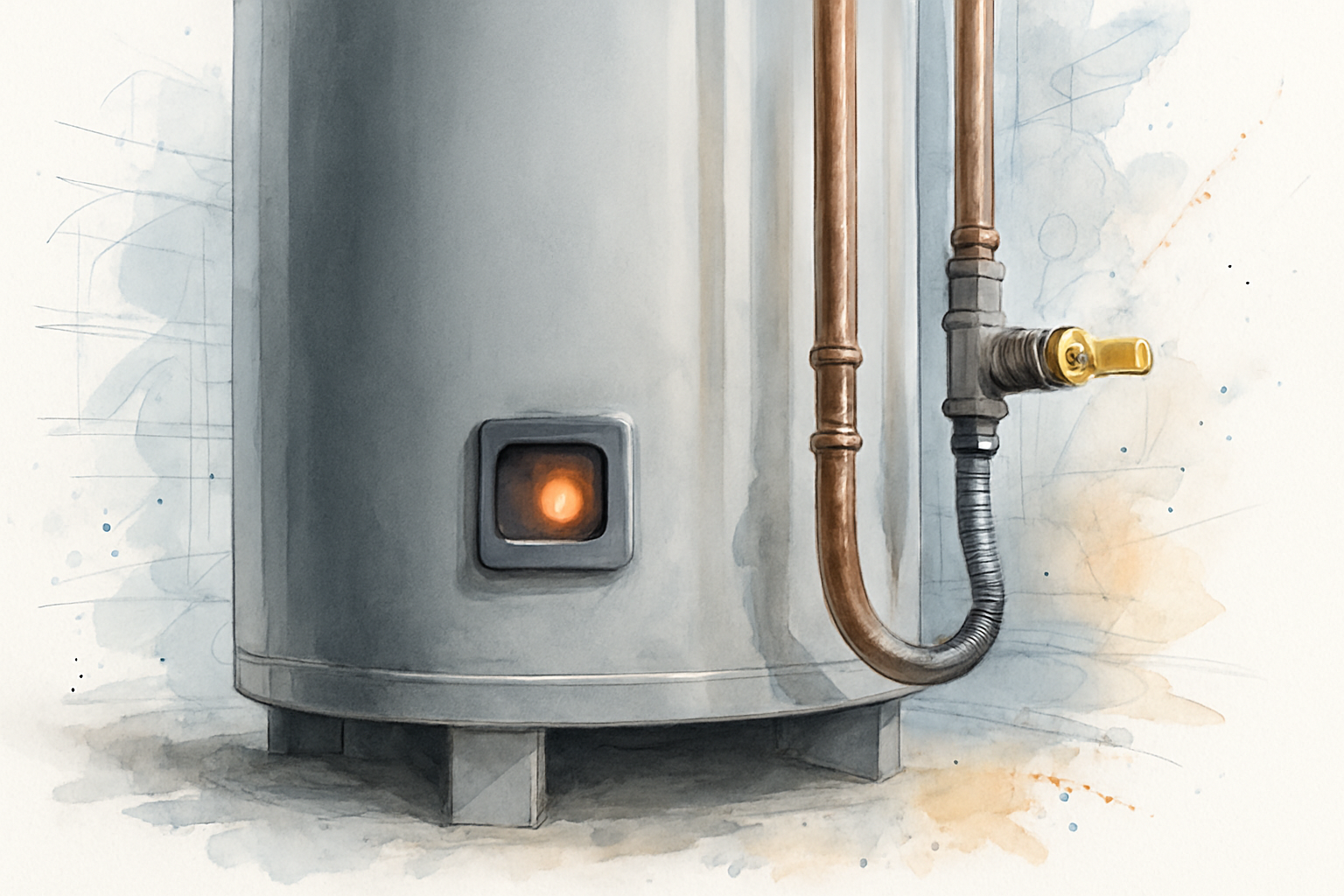
If the pilot light is out, you’ll look through the small viewing window near the bottom of the unit and see nothing, no flame at all. Gas units have a safety shutoff that cuts gas flow when the pilot isn’t lit, so no pilot means no hot water. A homeowner can safely look through that window to check. But relighting it is a different story. If the pilot doesn’t stay lit after a relight attempt, you’re likely dealing with a failed thermocouple.
The thermocouple is a small sensor that tells the gas valve the pilot flame is actually burning. When it wears out, the valve closes automatically as a safety measure, even if the pilot seems like it should stay lit. From the outside, this looks almost identical to a simple pilot outage. The difference is that the pilot won’t hold a flame, or it goes out again within seconds of being released. A thermocouple replacement is a straightforward repair for a licensed plumber, but it’s not a DIY job, you’re working near a gas supply line, and it needs to be done correctly.
A gas supply issue is less common but worth ruling out. Check whether other gas appliances in your home, the stove, for example, are working normally. If nothing gas-powered is functioning, the issue is upstream of your water heater entirely. If everything else works fine, the problem is isolated to the unit.
Tankless Units: Error Codes Are Telling You Something
Tankless water heaters behave differently, and their failure modes look different too. Instead of a pilot light you can physically check, a tankless unit communicates through a digital display on the front panel. When something’s wrong, most units throw an error code.
I had a caller recently dealing with an older Noritz tankless unit that was producing unreliable hot water, sometimes working, sometimes cutting out mid-use. That pattern turned out to be consistent with heat exchanger degradation, which is a failure mode I see more often in Santa Cruz County than in some other areas. The reason is hard water.
Santa Cruz County has hard water, high mineral content that leaves deposits inside the heat exchanger over time. Those deposits reduce heat transfer efficiency, and eventually the unit can’t keep up. It’s not immediate, and it doesn’t always throw an obvious error right away. You might notice your hot water gets inconsistent before it fails entirely. For more on what hard water and scale buildup do to a tankless system, this breakdown of tankless water heater problems covers it in detail.
If your unit is throwing an error code, write it down before you call. That code is a diagnostic clue, it tells a technician where to start looking. It doesn’t automatically mean you need a new unit. Different codes point to different components: ignition failures, flow sensor issues, venting problems, or overheating shutoffs all present differently. A technician needs to read that code and test the unit before any repair-versus-replace recommendation can honestly be made.
No Hot Water? Follow This Diagnostic Path
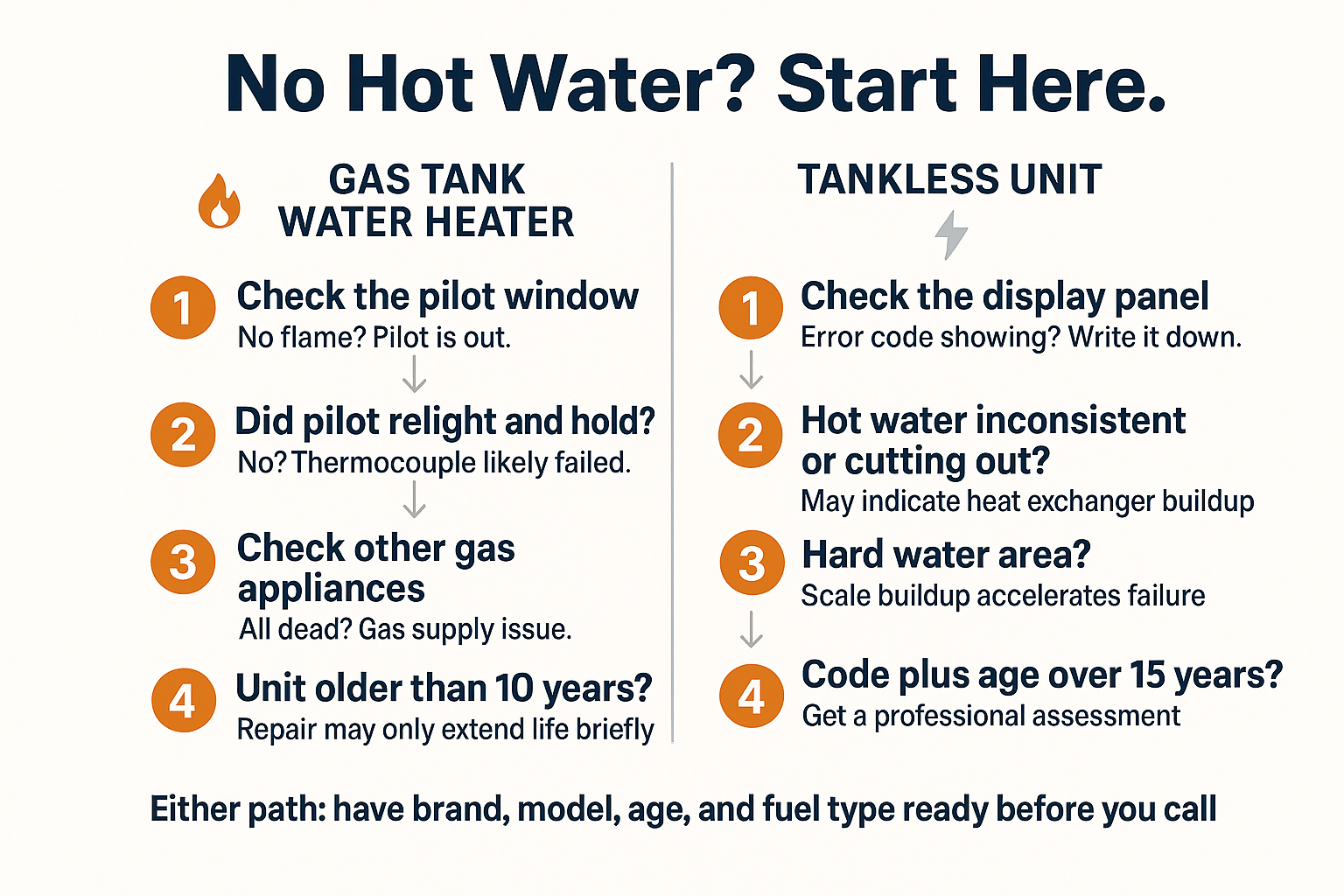
This quick reference maps the most common causes of no hot water by water heater type, so you can identify what you’re dealing with before calling for service.
The Factor Most Homeowners Underestimate: Age
I’ll be direct about this because it’s the part of the conversation most homeowners don’t want to have, but it matters.
A standard tank water heater has a realistic lifespan of 8 to 12 years. Tankless units last longer, often 15 to 20 years under normal conditions, but hard water shortens that window. The How Long Should a Water Heater Actually Last? article on this site goes into that in more detail if you want the full breakdown.
Here’s the honest framing: if your unit is already past the typical lifespan and it starts failing, a repair extends its life by months, not years. That doesn’t automatically mean you should replace it. But it’s a real factor in how to weigh the decision.
And in California right now, the regulatory landscape around water heater replacement is actively changing, particularly for gas units. If you’re approaching a planned replacement, the timing matters more than it used to. The article on California’s changing gas water heater regulations is worth reading if you want to understand what those changes mean for Watsonville homeowners specifically.
I’m not going to tell you which direction to go based on age alone. But when I arrive for a service call, unit age is one of the first things I check, because it shapes every recommendation that follows. The signs that say repair, not replace can help you think through that decision before a technician arrives.
Gas Tank vs. Tankless: Common No-Hot-Water Causes at a Glance
These are the failure patterns I see most often on service calls across Watsonville and Santa Cruz. Your situation may not match perfectly, but this gives you a starting point.
| Water Heater Type | Most Likely Cause | What to Check First |
|---|---|---|
| Gas tank | Pilot light out | Look through the pilot viewing window near the base |
| Gas tank | Failed thermocouple | Pilot lights but won’t stay on after releasing the control knob |
| Gas tank | Gas supply problem | Test another gas appliance in the home |
| Gas tank | Sediment buildup or failed heating element | Rumbling sounds, inconsistent output, unit over 8 years old |
| Tankless | Error code on display | Write down the code before calling, it speeds up diagnosis |
| Tankless | Heat exchanger scale buildup | Inconsistent output, especially in hard-water areas like Santa Cruz County |
| Tankless | Flow sensor or ignition failure | Unit clicks or tries to ignite but produces no heat |
| Either type | Unit past expected lifespan | Check the manufacture date on the label, age changes the repair math |
What to Have Ready When You Call
One of the most practical things I can tell you: the more information you have when you call, the faster we can help. A technician who arrives knowing the unit’s make, model, and age can often bring the right parts on the first visit.
Before you call, try to gather:
- Brand and model number, usually on a label on the front or side of the unit
- Approximate age, the manufacture date is often on the same label, or you can check your home purchase records
- Fuel type, gas or electric
- A description of what the unit is or isn’t doing, is there no hot water at all, or is it inconsistent? Any sounds, smells, or error codes?
For tankless units, the U.S. Department of Energy’s guidance on water heater maintenance also notes the importance of annual flushing to combat scale buildup, something worth knowing if your unit is approaching that service interval.
If you’re dealing with a situation where you’re not sure whether it qualifies as an emergency or can wait until morning, the guide on when a plumbing problem becomes an emergency can help you make that call. And if it is urgent, the middle-of-the-night plumbing guide walks through what warrants an after-hours call versus what can wait a few hours safely.
Having those details ready doesn’t just save time, it’s how a professional diagnostic conversation actually works.
Frequently Asked Questions About No Hot Water Repairs
Can I relight the pilot light on my gas water heater myself?
You can safely check whether the pilot is lit by looking through the small viewing window near the base of the unit. If it’s out, most manufacturers include relight instructions on the unit itself. However, if the pilot doesn’t stay lit after following those instructions, stop. A pilot that won’t hold a flame usually means the thermocouple has failed, and that repair involves working near a gas line. A licensed plumber should handle anything beyond a simple relight.
My tankless unit is showing an error code. Does that mean I need a new one?
Not necessarily. An error code is a starting point for diagnosis, not a verdict. Different codes point to different components, some are simple fixes, some are more involved. Write the code down and describe what the unit was doing before the code appeared. A technician can read that code and test the unit before making any recommendation.
How do I know if my water heater is old enough that repair doesn’t make sense?
Check the manufacture date on the label attached to the unit. If a tank water heater is past 10 to 12 years, or a tankless unit is past 15 to 18 years, age becomes a meaningful factor in the repair-versus-replace conversation. A repair on an older unit can still make sense depending on what failed and how the unit has been maintained, but it’s a conversation worth having honestly with your technician.
Why does hard water matter for my water heater?
Santa Cruz County has hard water, high mineral content that leaves scale deposits inside tanks and heat exchangers over time. In tank units, sediment builds up at the bottom and forces the heating element to work harder. In tankless units, scale inside the heat exchanger reduces efficiency and can eventually cause the unit to shut down or throw error codes. Annual flushing or descaling helps, but units in hard-water areas do tend to show wear earlier than manufacturer estimates assume.
I have no hot water and I also smell something that might be gas. What do I do?
Leave the building immediately. Do not flip any light switches, use your phone inside, or operate anything electrical. Call from outside the property. Gas leak response is available 24/7, this is not a situation to troubleshoot on your own.
Can I get a same-day service call for a water heater that’s completely out?
Availability varies depending on the day and existing schedule, but 24/7 emergency service is available for situations that can’t wait. When you call, describe what the unit is doing, or not doing, and whether the failure was sudden or gradual. That information helps determine how urgent the call is and what parts a technician might need to bring.
Ready to Get Your Hot Water Back?
If you’ve worked through this guide and still aren’t sure what’s wrong, or you know what’s wrong and need a licensed plumber to fix it, we’re available. Maverick Plumbing Technicians, Inc. serves Watsonville, Santa Cruz, and the surrounding areas throughout Santa Cruz County, with 24/7 emergency availability for situations that can’t wait. Call us at (831) 515-9903 and have your unit’s brand, model, age, and a description of what it’s doing ready, that one detail makes the whole conversation faster and gets you back to hot water sooner.
